What To Do When You Are Using a Public DC Fast Charger

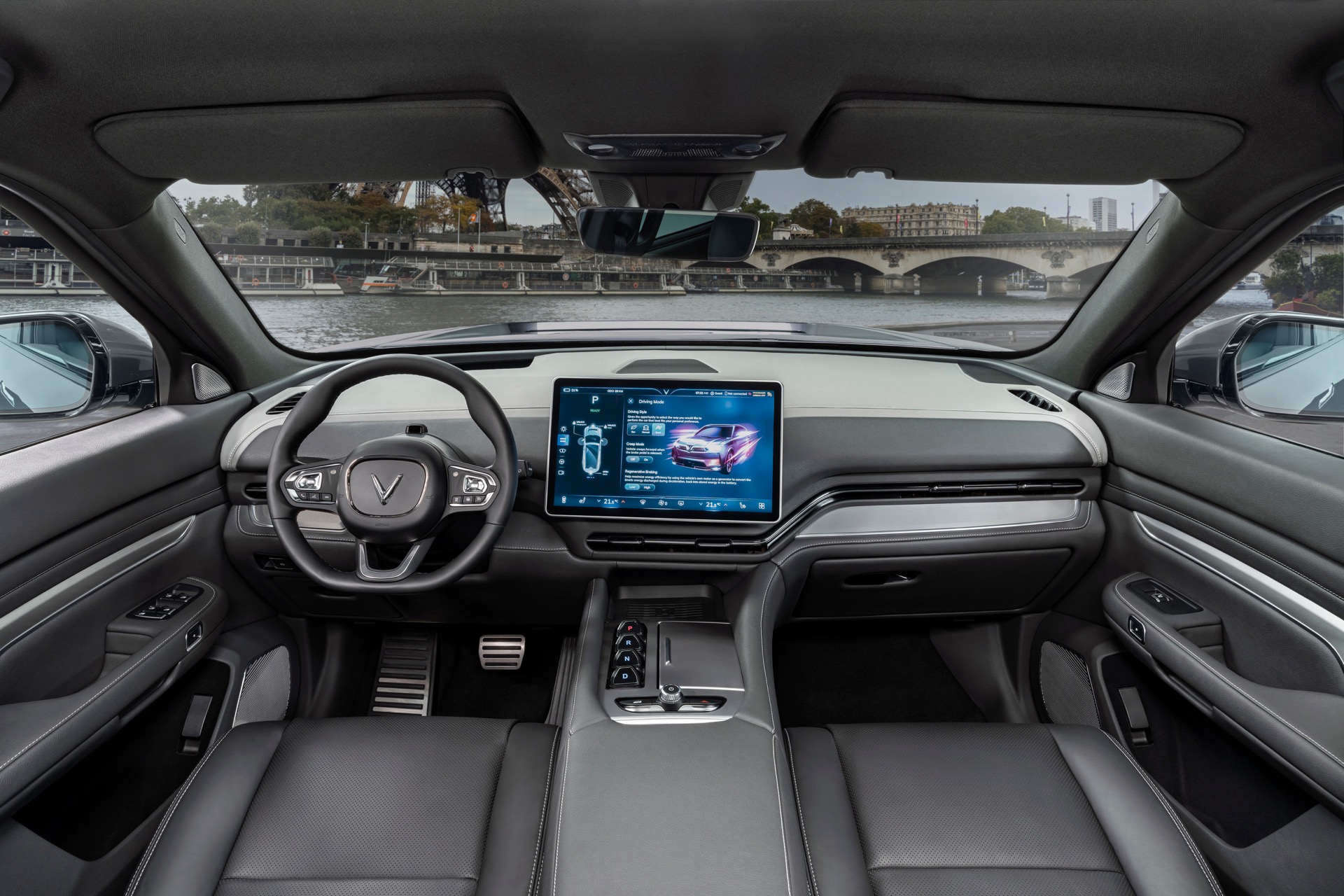
VinFast vehicle at a charging station

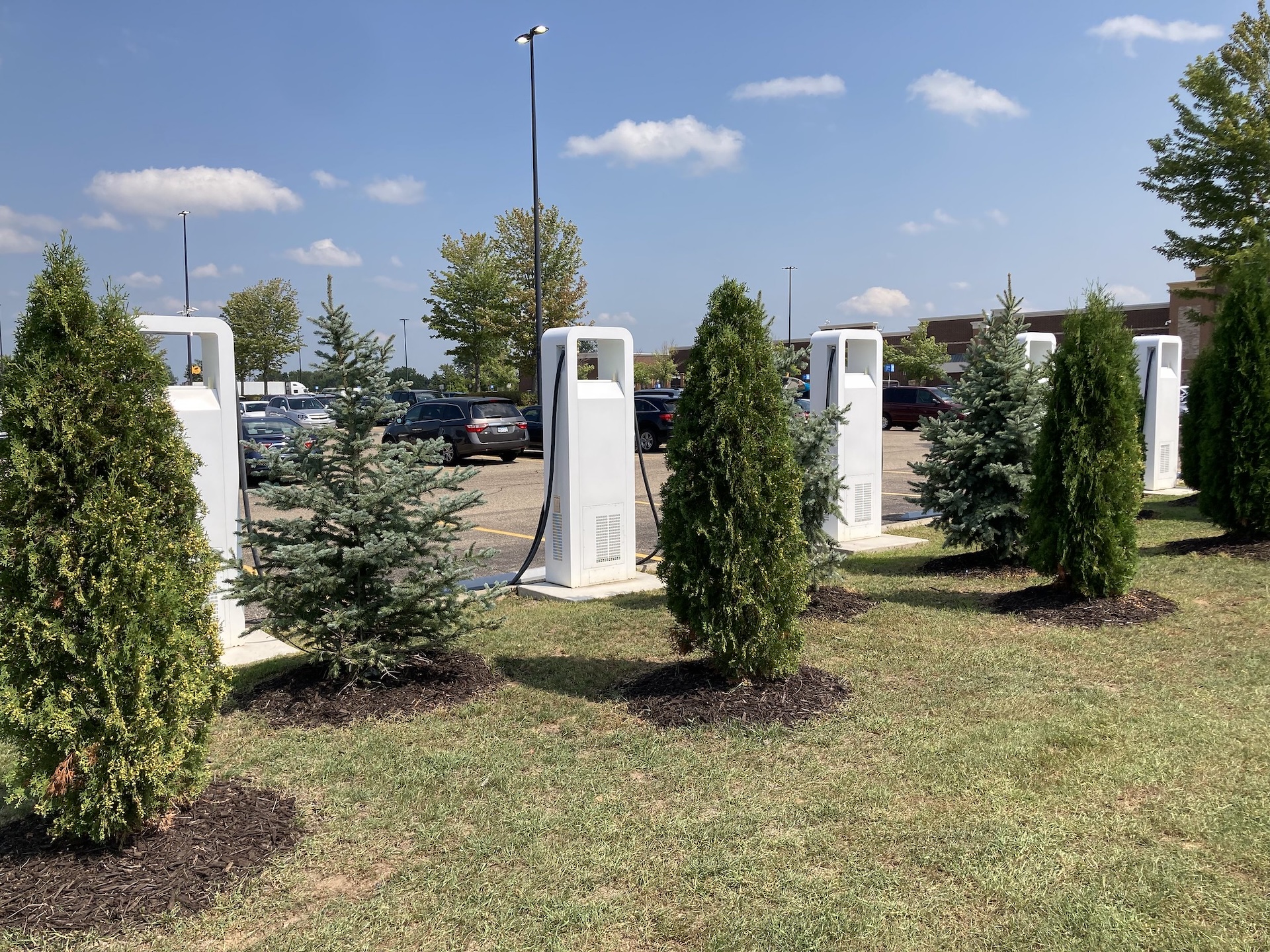
EV Chargers

 One of the things electric vehicle owners do regularly is charge their batteries, especially at public DC Fast Charging stations. While they are in high demand, charging stations provide quick energy delivery to your battery. Across the Metroplex, the number of stations continues to grow as demand for EVs increases. With growth comes some challenges, such as figuring out who gets to charge their vehicle first or how long to keep it on the charger.


Luckily for us, U.S. News and World Report shared some etiquette tips for using these public DC Fast Chargers. They will come in handy when you need to recharge your VinFast VF8 and VF9.


The first tip U.S. News and World Report gives us is to plan your charging session in advance. You do not need to reserve a spot at a charger; simply plan where you will be at the most convenient time for you to charge. Also, know the traffic patterns around the charging station. If you know when it’s less busy, that’s when you should consider going.
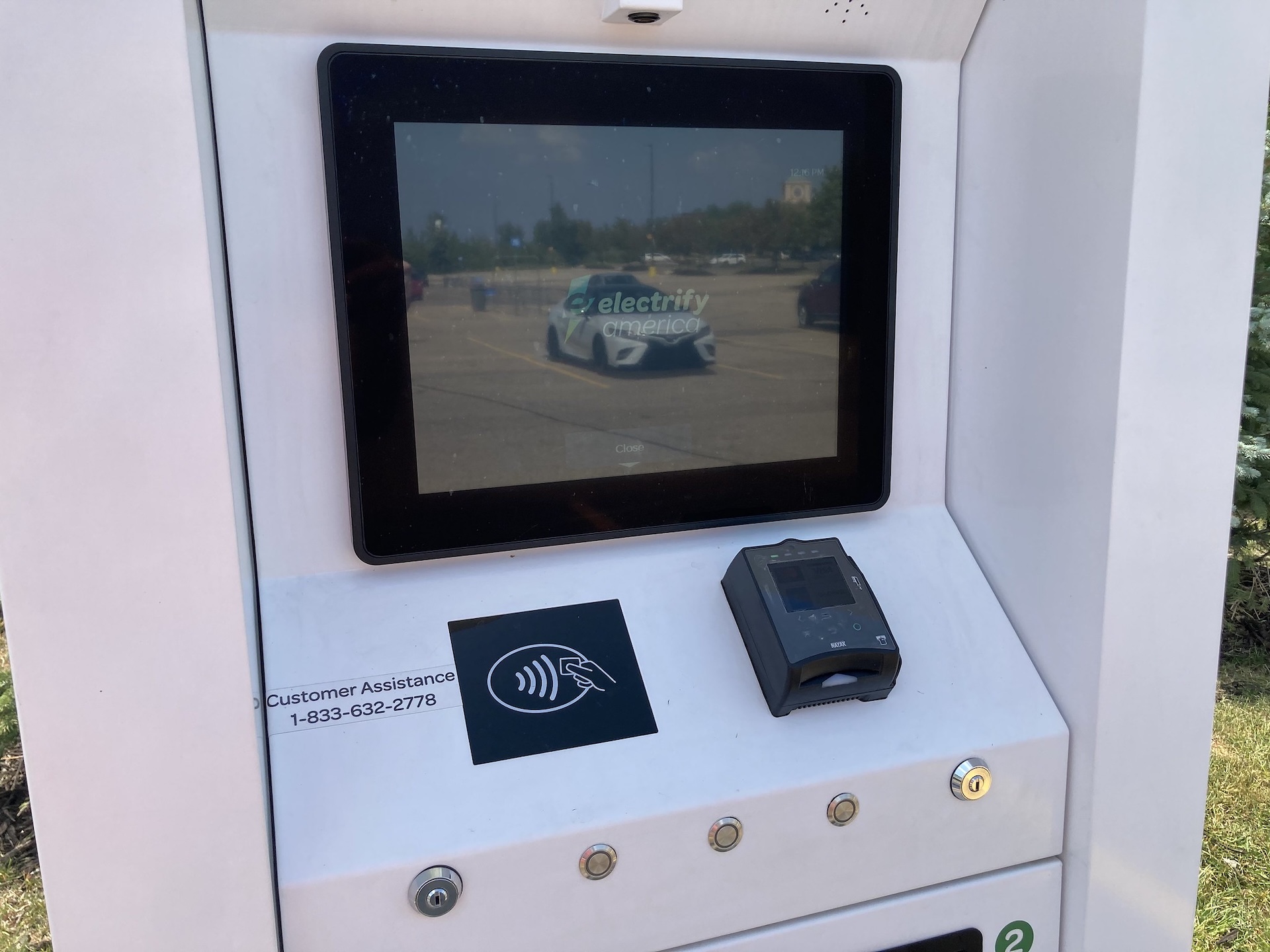
 

EV Charging Station


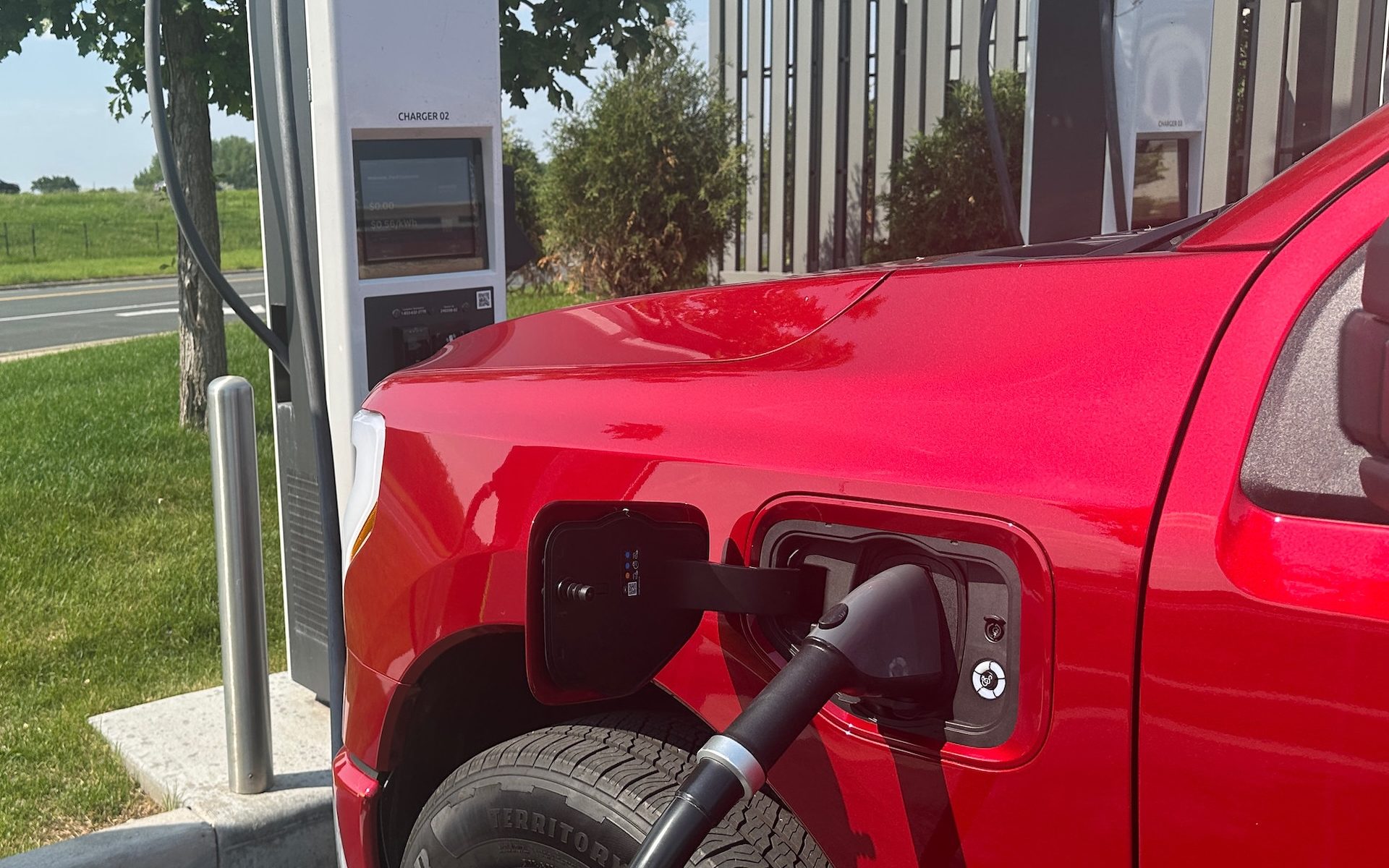
When you get to the charging station, don’t take a spot when you are waiting. If you are ready, park in the designated spot by the plug you are going to use and charge up. When you are done, just unplug and move your vehicle so the next EV can take your spot to charge. Also, chargers charge by the hour. The longer you’re there, the more your session will cost.


Take a look at the maximum charging rates for each plug. On the VinFast VF8, that rate is 150-kilowatts. Use that as a guide to choose which station to plug into. Then, make sure your VinFast is positioned so the charging port is closer to the intended plug, without stretching it further than it should.
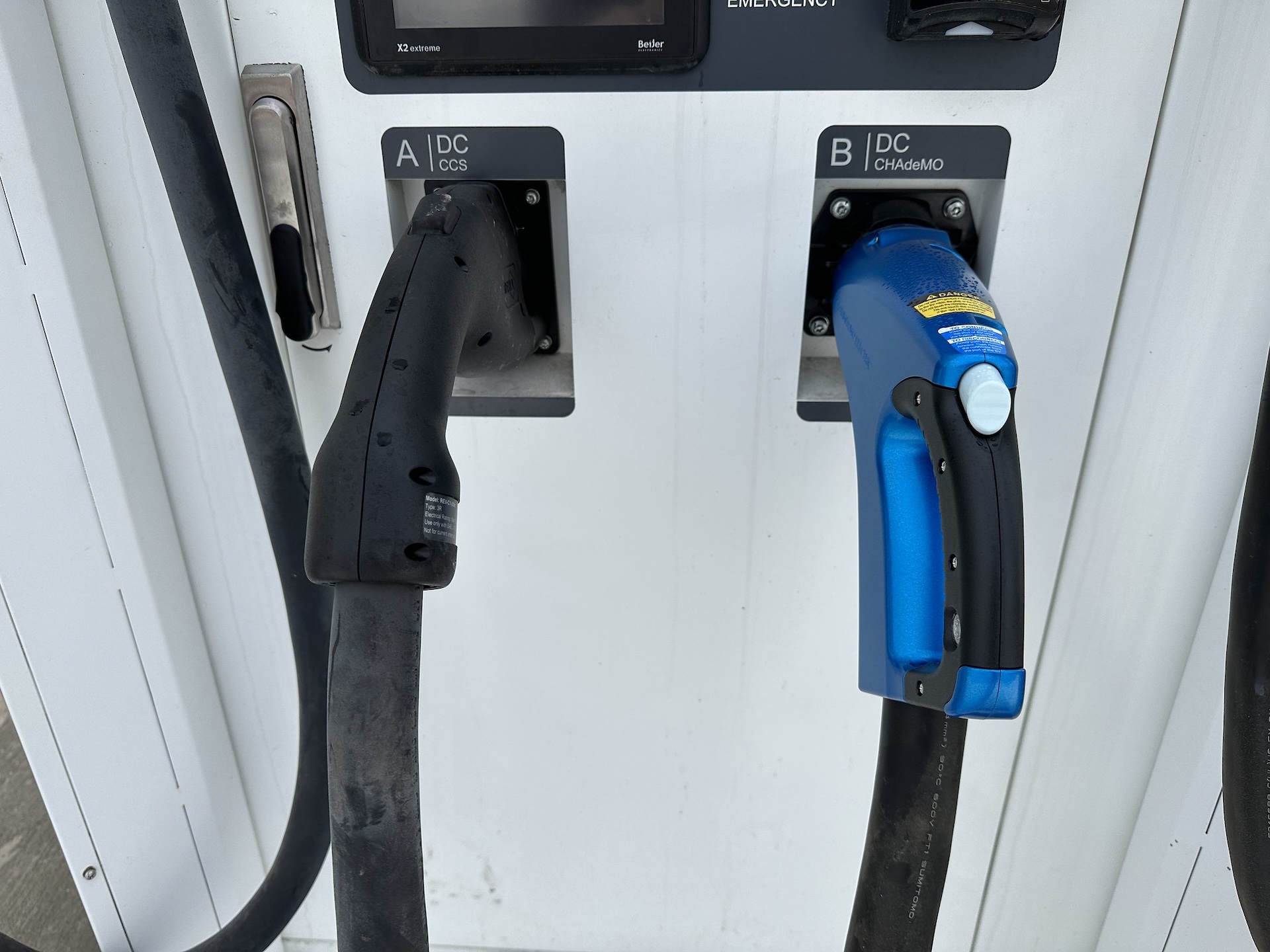
 

EV Charging Station


There is a tendency for us to top off your battery to 100% state of charge. The truth is that recharging slows down after 80-85%. It is best to stop at 80% and wrap up your session at the station. You will have plenty of range at that state of charge. Just as a quick note, the VinFast VF8 can recharge from 10-70% in 31 minutes.


You have probably been waiting to use a charger at the given station. Then, some other person decides to swoop in just when you are about to pull in. That’s cutting in line, and it’s not a good thing. If you see this happen, be courteous and kind to the other person and explain that you’ve been waiting for that charger. Hopefully, they will move for you and wait for the next one. However, if you took someone else’s space before that person was going to that spot, apologize for doing so, let that other person charge up, and wait your turn.


Remember that DC Fast Charging stations are for EVs only. A plug-in hybrid with a J1772 CCS or CHAdeMO plug can be charged at those stations, if available. PHEVs with a J1772 plug can also charge up at a nearby Level 2 station. No one else should be parked at an EV station spot. In Texas, it is illegal for an internal combustion vehicle to park at an EV station spot.


There are a few more things to mention. If there is a time limit at a station, please respect the times posted for each charger. Also, please don’t unplug another EV from the charger for any reason. If a charger is broken, report it to the provider via the app or the phone number posted at the station. Make sure the area around your charger is clean of anything you may have left behind. There should be a garbage and/or recycling bin nearby.
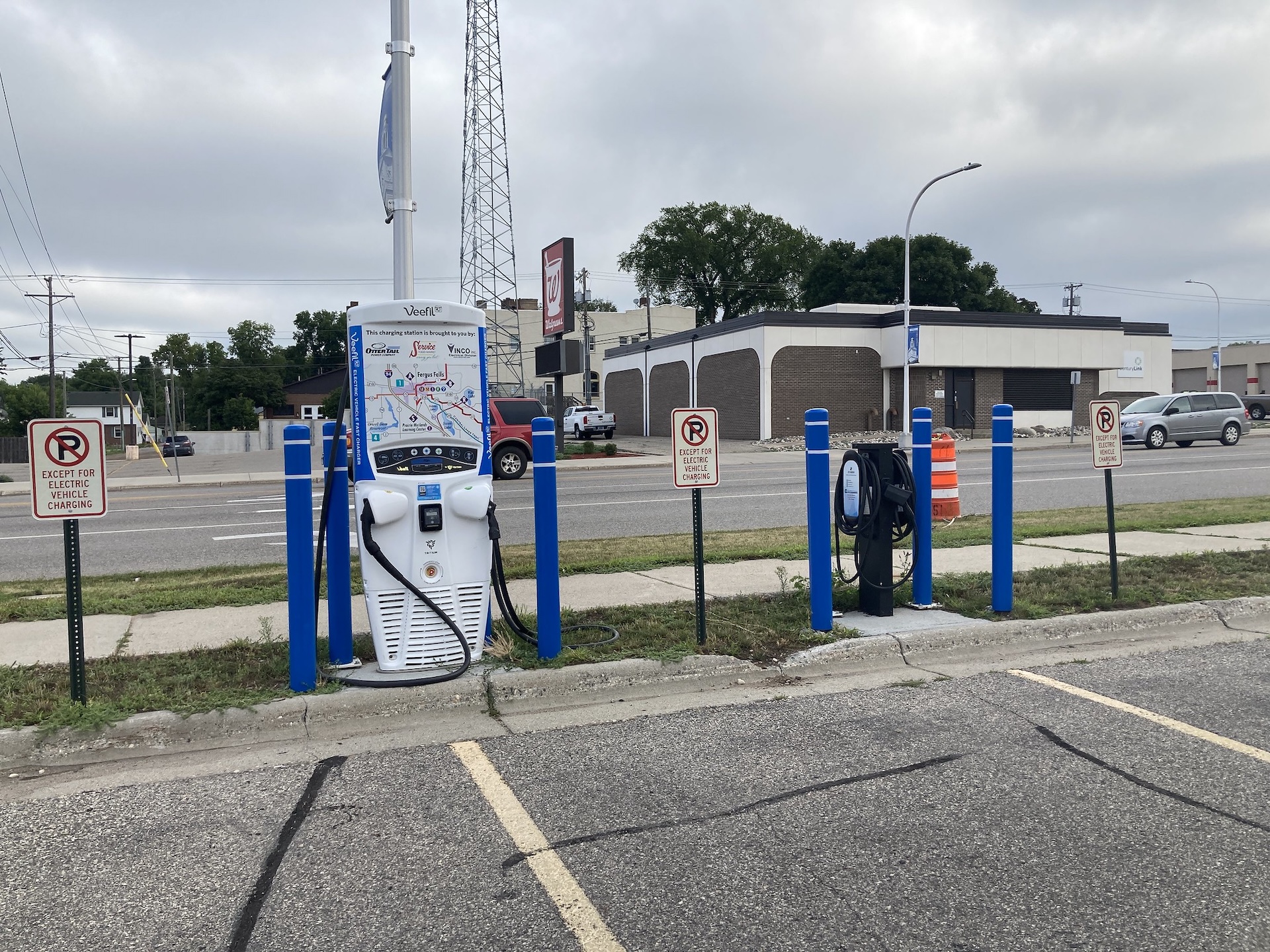


Lastly, if you see someone who is struggling with their charger or has never used one before, be a good fellow EV owner and ask if they need help. If so, help them out.


Hopefully, these tips will help your public charging experience in your VinFast VF8 or VF9. If you have any further questions about your vehicle, contact us at Ewing VinFast of Plano. We’re always here to help you.
Do You Need to Replace Tires on an EV With EV-Specific Tires

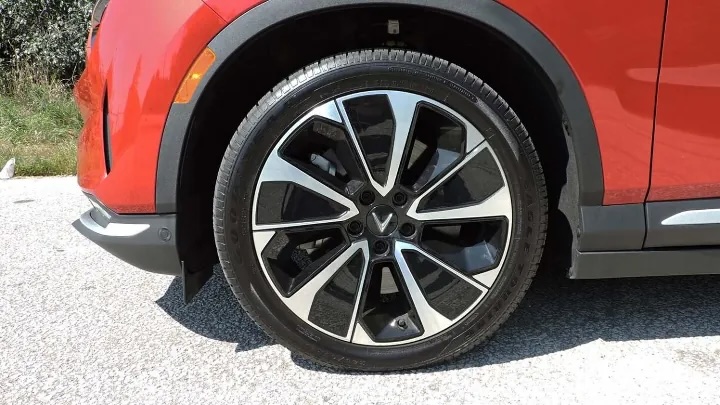
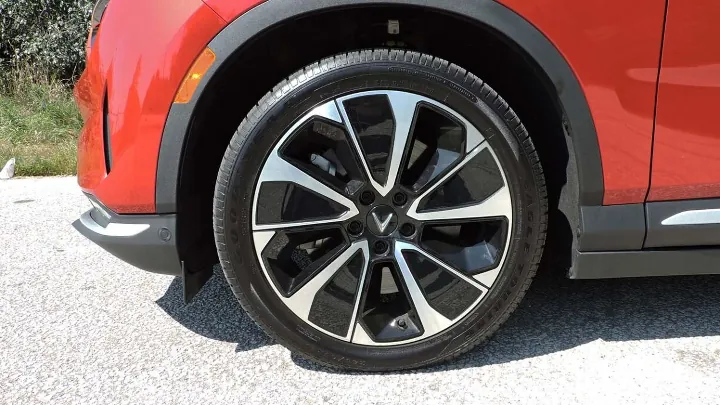
VinFast VF8 front wheel

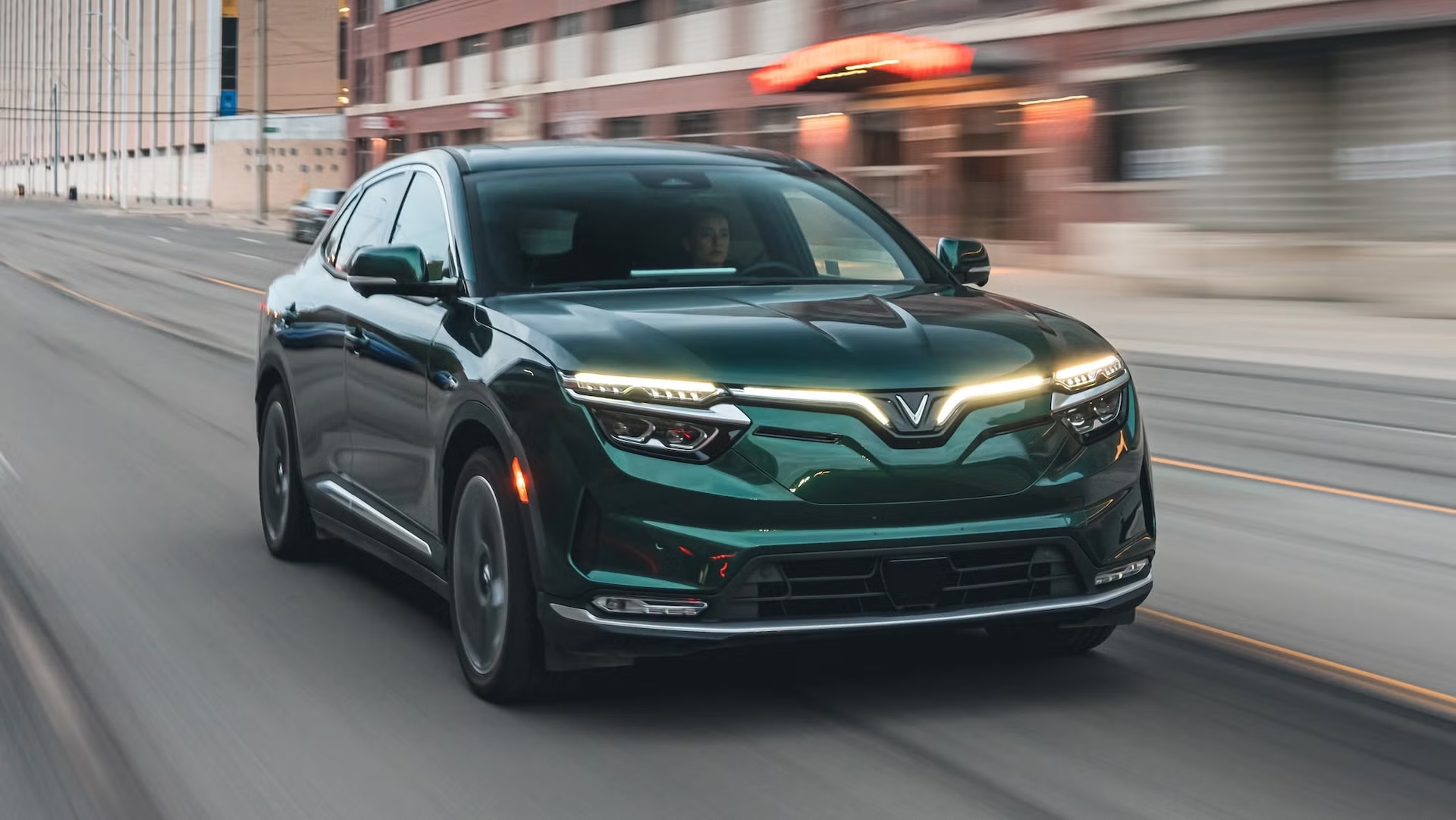
VinFast V8 driving on a city street


One of the main advantages of an EV over an ICE (Internal Combustion Engine) vehicle is lower maintenance. Tasks like oil changes, filter replacements, spark plug changes, and replacing hoses and belts are generally not needed. However, one type of maintenance that may happen more often than with ICE vehicles is tire replacement. Ewing VinFast of Plano explains why this is and what you should watch for when it’s time to replace your EV’s tires.


There are two reasons why tires may wear out faster on an EV than on a similarly sized internal combustion (IC) vehicle. The primary reason is the heavier weight. The large battery pack under the cabin increases an EV’s weight, often by 1,000 to 2,000 pounds, depending on the model. For example, comparing the Vinfast VF8 to a similarly sized gas-powered crossover, such as the Chevrolet Blazer, the Blazer weighs approximately 4,144 pounds, while the VF8 weighs around 5,771 pounds.


The second reason is the quick, accessible torque of an EV. Again, using the Blazer as an example, a mid-level model offers 228 lb-ft of torque, while the VF8 delivers a powerful 457 lb-ft, ready to be unleashed with each tap of the accelerator. That can make the VF8 quite fun to drive, but putting that torque to use does cause wear on the tires. And we are not referring to spinning tires. Just handling the torque while the tires maintain traction can create wear.


When it’s time to replace the tires on an EV, the first question often is, “Do I need EV-specific tires?” And the answer is, “Maybe, maybe not.” While that answer may be disappointing, it gives you the freedom to choose based on your priorities.


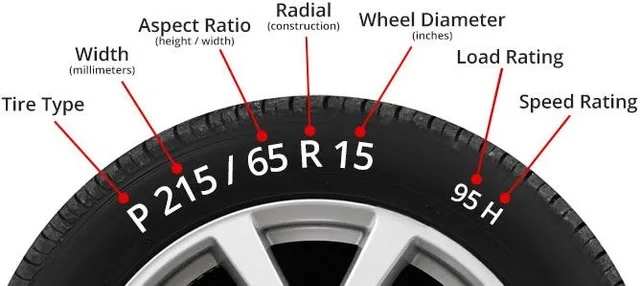
Learn how to read what your tire is telling you


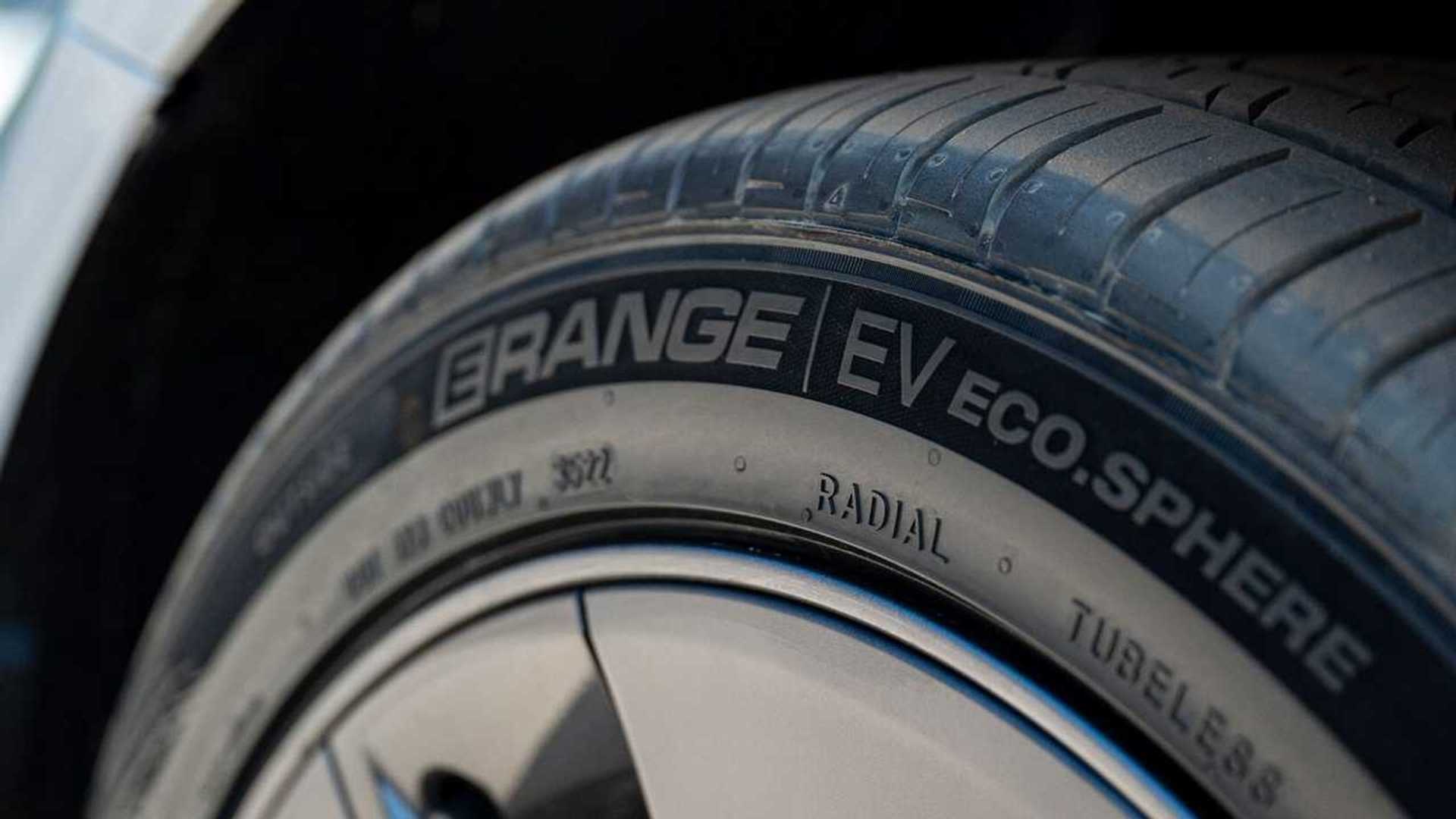
EV-specific tires are designed to have lower rolling resistance, partly due to a harder rubber compound, which helps your EV travel farther between charges. Remember, the 82 kWh battery in a VF8 has the energy equivalent of 2.4 gallons of gas. That would only power the mentioned Blazer for around 65 miles, but it’s the efficiency of electric power that allows a VF8 to achieve a range of 235 to 256 miles. EVs are much more efficient, but this also means their range can be more affected by factors that reduce efficiency, like tires with higher rolling resistance. The tradeoff for higher rolling resistance can be improved traction.


The efficiency differences between standard and EV-specific tires can vary significantly, often resulting in a 5-14% difference in range. Whether this should be a consideration largely depends on how you drive your car. If you charge at home and your range is significantly greater than your typical driving distance between charges, a 5-14% range difference may be negligible for you. In that case, you might overlook EV-specific tires in favor of tires with attributes you value directly, such as dry or wet traction or snow performance. Plano’s average of two inches of snow per year is well below the US average of 28 inches, but if you frequently travel north to snowier regions, snow performance might be more important. Of course, if you often take your EV cross-country and charge at roadside stations, lower-rolling-resistance tires could be beneficial.


Sailun Erange Tire


Another EV trait is quiet operation; however, the absence of engine noise can make tire noise more noticeable. Consequently, many EV-specific tires may feature noise-reduction technologies, such as foam liners, to absorb or reduce tire and road noise before it reaches the cabin. These technologies can also be found on non-EV-specific tires.


Because EVs are heavier, one thing you will want to ensure is that your replacement tires have a sufficient load index. On the tire sidewall, this is the last number on the tire size, and it will show “103” on the VF8. This indicates a weight capacity of 1,929 pounds per tire. Thus, four of these tires can handle a load of 7,716 pounds, which is designed to be enough to include the VF8 and 1,945 pounds of passengers and cargo. You will want a load index of at least 103 for your replacement tires. Simply Google “Load tire index chart” to see what weight level each load index translates to pounds.


VinFast VF8 front wheel


Therefore, your replacement tires should be selected based on how you use your EV and your priorities for ride quality, dry and wet traction, snow handling, noise levels, and expected longevity. If you have questions, don’t hesitate to contact the Ewing Vinfast of Plano Service Department. By now, they’ve likely spoken with many Vinfast owners about their experiences with replacement tires and satisfaction levels.

​​How To Get Your VinFast Through The Snow and Ice​

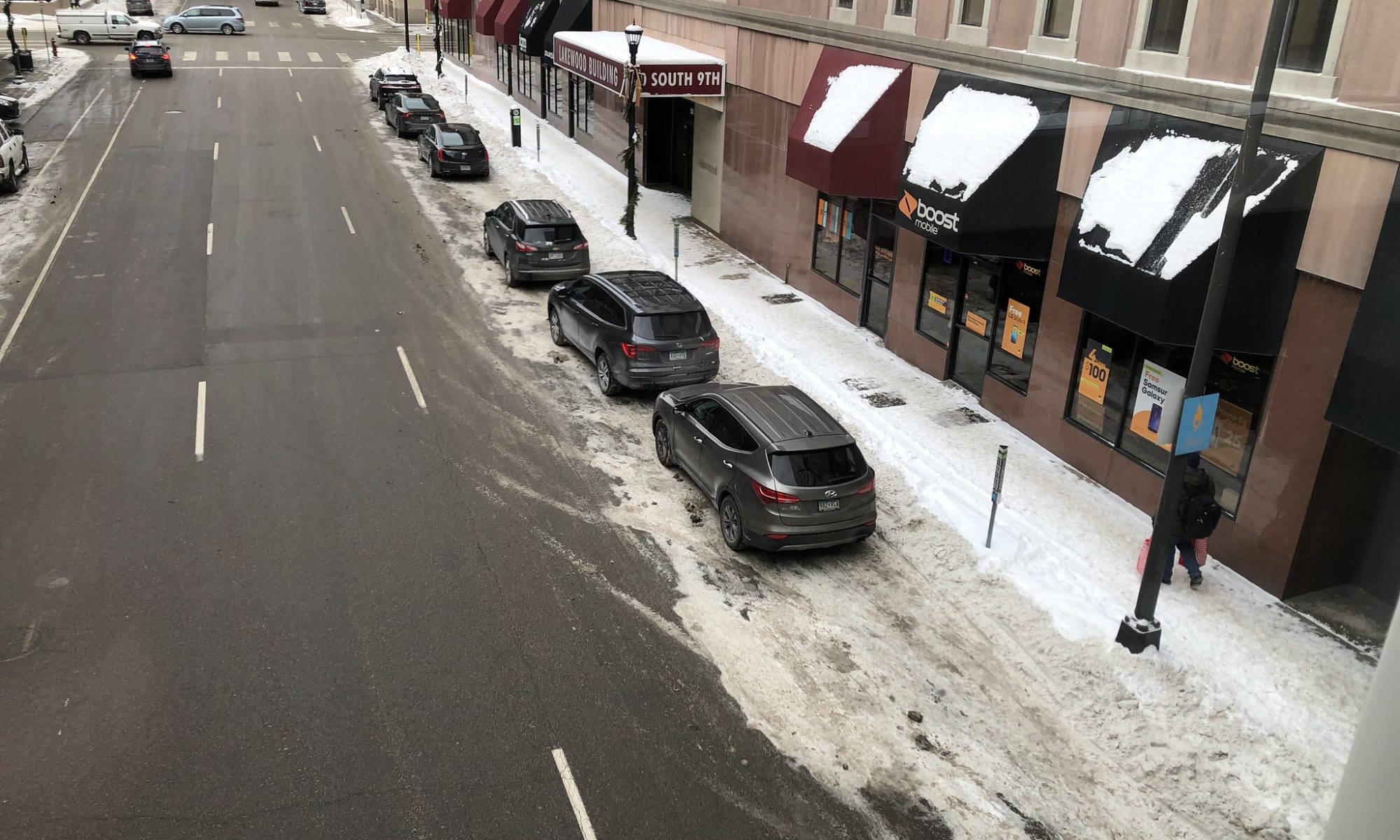
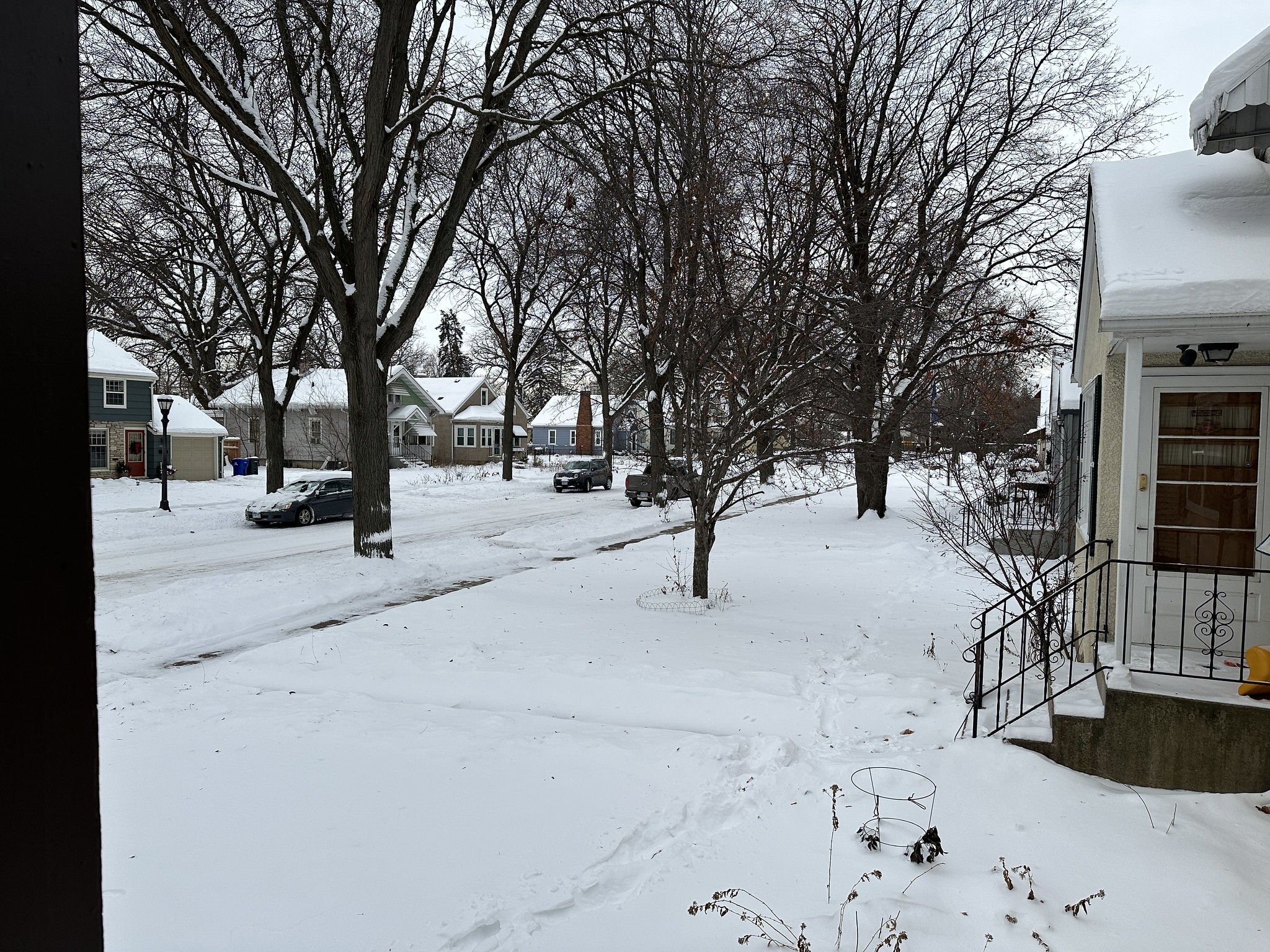
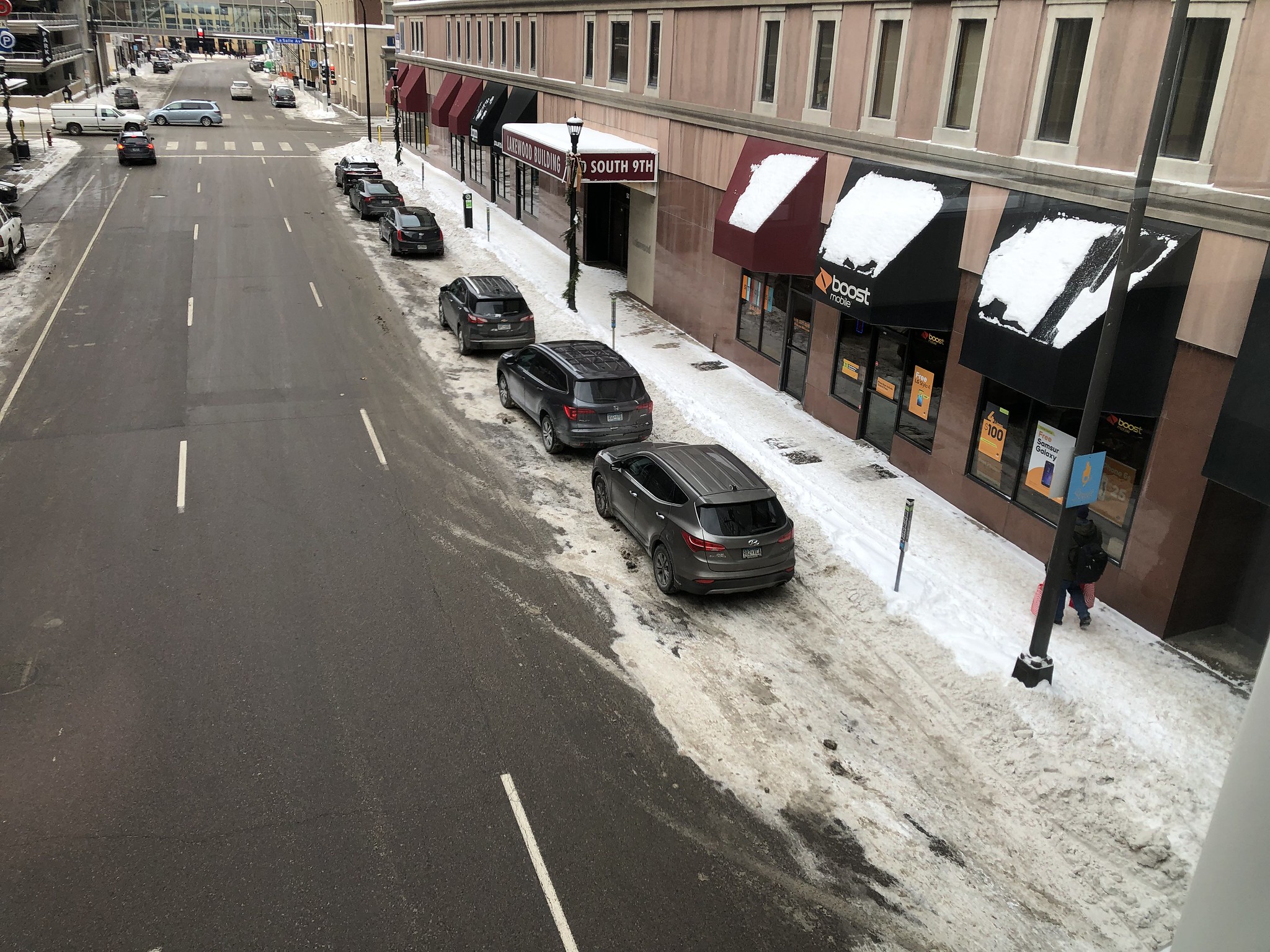
Cars parked on a a neighborhood street by a snow-covered sidewalk

Snow covered neighborhood street  


The Metroplex typically experiences a surprise winter snap almost every year. If it is not snow, then it’s a freezing mix of rain and ice. While this isn’t necessarily an issue when trying to drive every day on our freeways and tollways, it could be more of a challenge when you have an electric vehicle, such as our VinFast VF8 and VF9.


What can you do to make sure your VinFast handles these weather conditions? Here are a few tips to consider when owning your VF8 or VF9 for year-round use.


Parking your VinFast in a garage is the best thing you can do for it. It is protected inside from the elements, so you won’t have to deal with scraping the ice off it or brushing the snow. When it is time to go, know that you can start your VinFast without having any tailpipe emissions, making your garage a safe place to keep your vehicle.


Snow covered neighborhood street before the plow


If you do park outside, make sure to remove all snow and ice from your VinFast before starting it up. Snow adds weight to your vehicle when it is moving. Along with ice, snow can affect the sensors that work with your VinFast’s driver assistance systems. A good brush off will do the trick.


Make sure your VinFast is plugged in when parked. This will help with the health of the battery pack. It works best when you have your home charger inside your garage. Sometimes, cords from a charger could freeze up when exposed.


We tend to have our heater and defroster on when we drive in winter conditions. You can turn on the heated seats and steering wheel, as they consume minimal energy from the vehicle. Lowering the climate control temperature also helps. When at a public charging station, you can minimize the heat inside your cabin to maintain energy flow back into the vehicle.


Cars parked on a a neighborhood street by a snow-covered sidewalk


The one key component that will get you through the winter is your tires. Maintaining proper air pressure will not only maximize range but also ensure the right amount of contact with the surface. If your tires are either underinflated or overinflated, it will affect your range, overall safety, and on-road performance under various conditions over time with your VinFast. Tire pressure information is found on the driver’s side door frame or in your owner’s manual.


We know that winters in the Metroplex are a part of our lives here. Your VinFast will get you through them like a champ. Contact us at Ewing VinFast of Plano for additional tips on navigating the colder months in your VF8 or VF9.

​​The VF 9 Soars in a “Real Mom” Review​

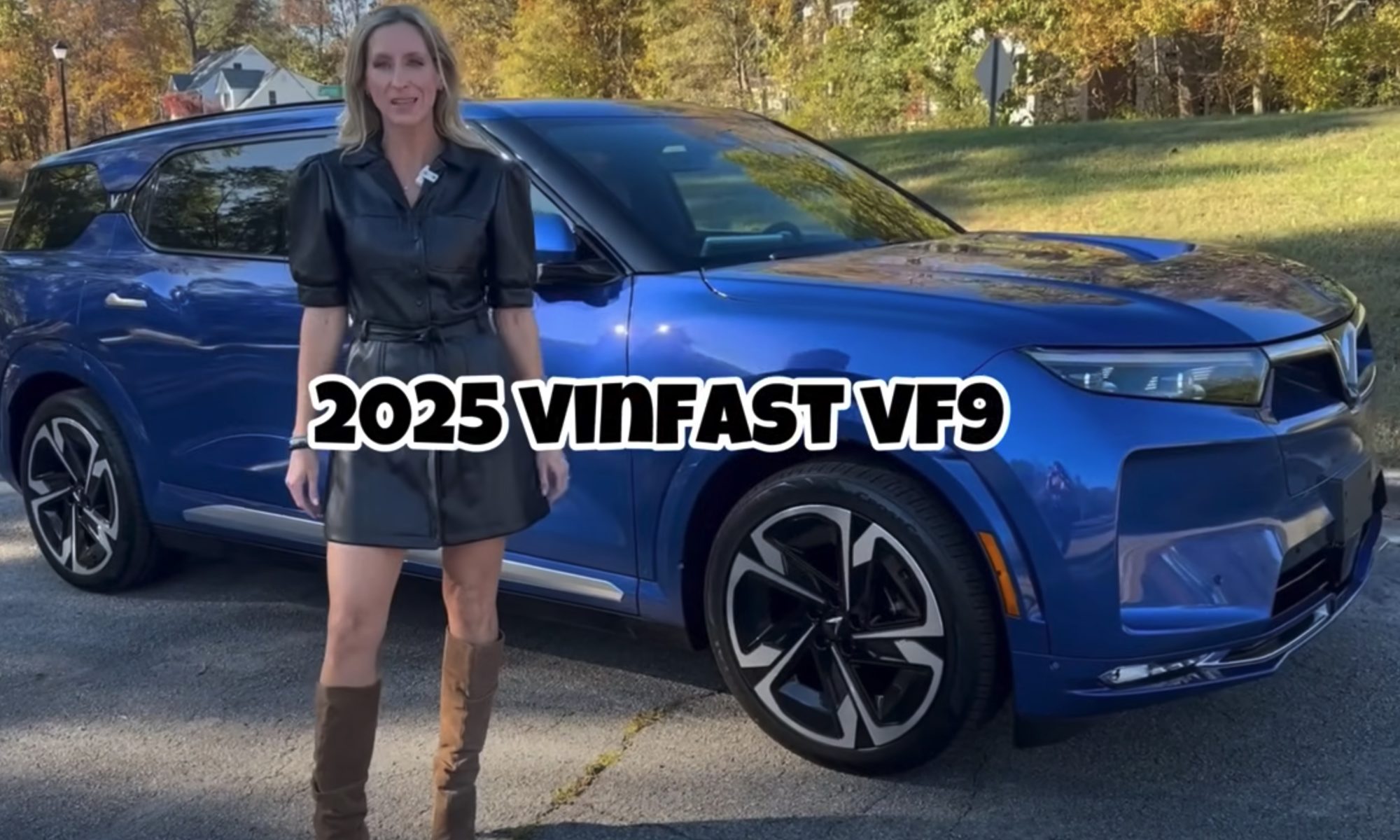
Real Mom Review shot of the VinFast VF9

Real Mom Review shot of the VinFast VF9


For the many people wondering if a vehicle can work for their family, Jana Askeland offers what she calls Real Mom Reviews, which examine a car from the perspective of a mom of, in her case, two young boys. She recently reviewed the VinFast VF 9, a vehicle definitely designed for families, and Ewing VinFast of Plano gives you this summary of what she found.


Having a mom review a three-row SUV is entirely appropriate, as it is often moms who use these cars daily for school and after-school runs, as well as for the daily tasks that keep the household running. In this test, she looked at the VF 9 Plus, which, as she states, trades some range for additional amenities compared to the Eco model. Some of those amenities include a premium vegan leather interior, a 12-way power driver’s seat with memory, a panoramic glass roof, roof rails, second-row captain’s chairs, second-row vents and touchscreen control, and a premium 13-speaker audio system.


VinFast VF9 interior view looking towards the back


Perhaps because of her mom’s perspective, Jana devoted considerable attention to the second row, which offers several amenities, including the second-row captain’s chairs. These features include an eight-way power configuration for the seats and a center console equipped with four USB ports, a wireless charging pad, and a rear touchscreen for climate control adjustments. She notes other luxury car features, such as ambient lighting in essentially any color and soft-closing doors that cannot be slammed or left insufficiently closed, as the vehicle completes the closing itself.


Real Mom Review shot of the VinFast VF9 interior


Jana demonstrated generous access to the third-row seats, enabled by the fold-and-tumble second-row seats. She did have a mishap, pinching her thumb while closing the door with the second-row seat still tumbled forward. However, this is an unlikely scenario in everyday use, as it is unlikely that the third row would be occupied while the second row would not, so the seats would indeed be returned to their normal position for occupancy before the door was closed.


When driving, she certainly took note of the 420 horsepower and 457 lb-ft of torque, figures that are unlikely to be found in a gas-powered drivetrain, which enables a 0-60 acceleration time of 6.7 seconds. On the flip side, three levels of brake regeneration allow for a range of operation, from one-pedal driving to the smoothness of a lower regeneration setting. She also noted the “Creep” function, which enables the vehicle to slowly crawl forward when the brake is lifted, if desired, or can be turned off to keep the car stationary when the foot is lifted from the brake pedal.


All EVs perform best when they can be charged at home overnight and can meet daily driving needs, which are likely far short of the VF 9 Plus’s 290-mile range. When longer trips are required, the VF 9 can transition from a 10% to a 70% state of charge in approximately 35 minutes with a Level 3 charger.


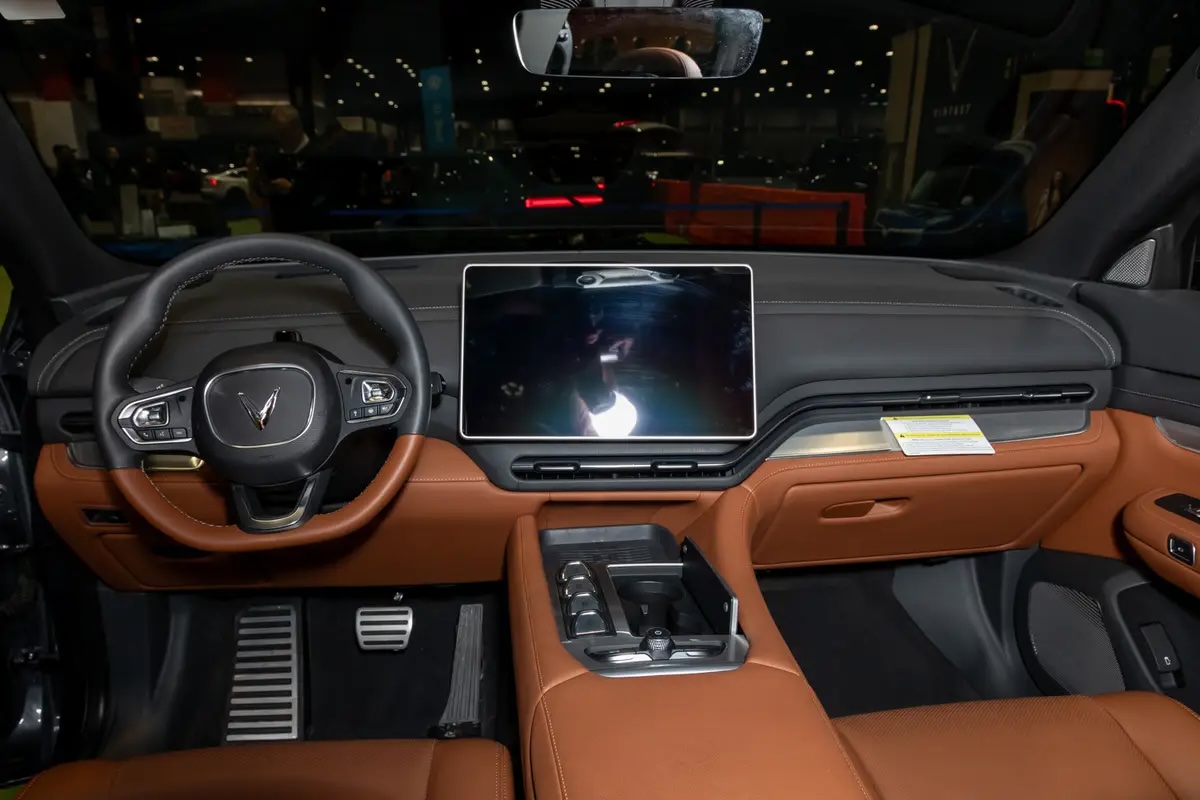
VinFast VF9 Interior front row looking forward to the infotainment center


While the VF 9 does not have a conventional driver’s display, she notes that the head-up display, standard on both the Eco and Plus models, more than compensates by being in the line of sight and providing a driver’s choice of information. The 15.6-inch touchscreen is powered by the Google Built-in operating system and features intuitive, easy-to-understand graphics across a variety of systems.


Overall, she presents a strong case for the VF 9 as not just a three-row EV SUV but a true luxury vehicle.


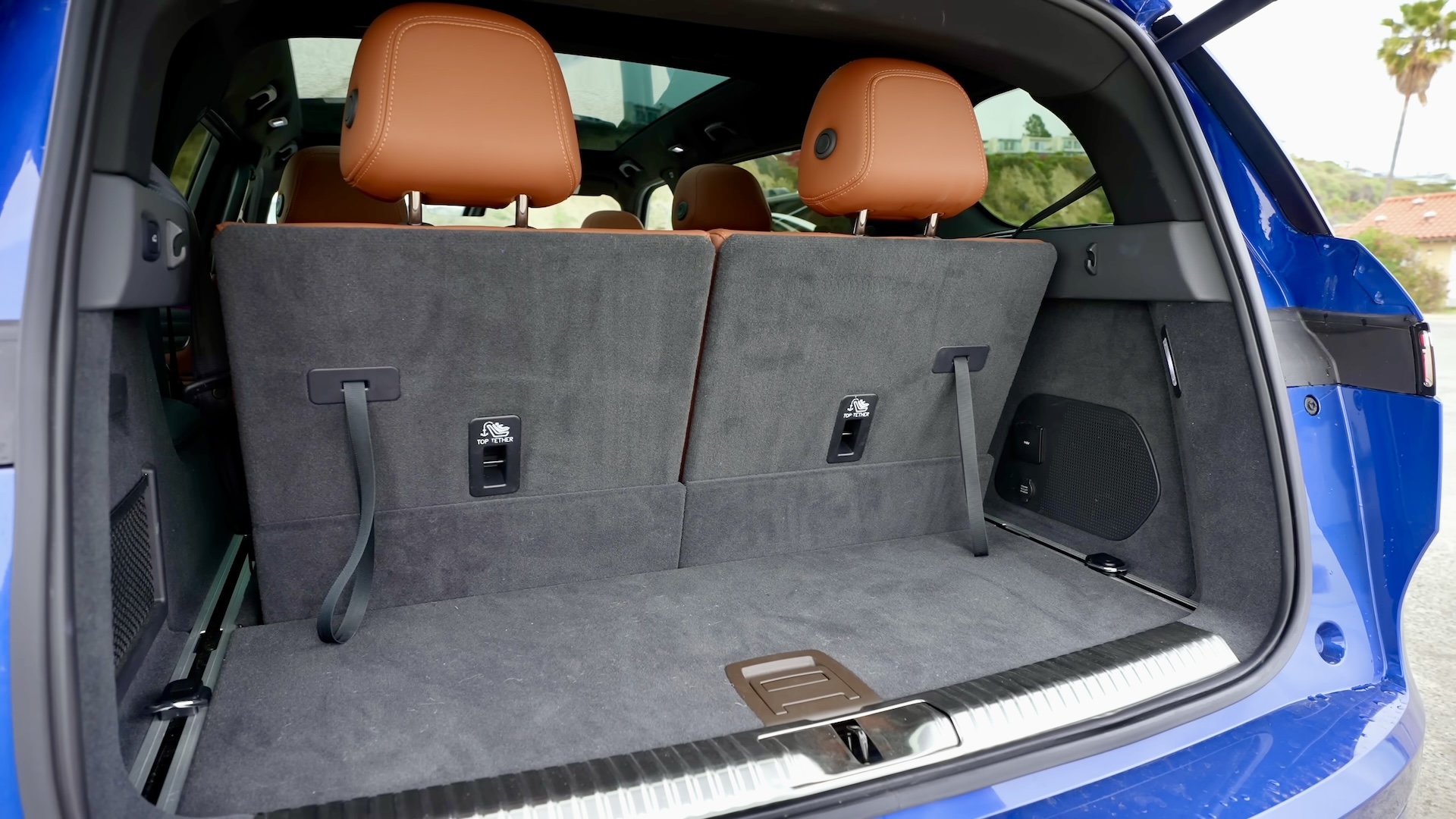
Vinfast VF9 trunk cargo space


As of this writing, the VF 9 is not yet in Ewing VinFast of Plano’s inventory, but it will be arriving soon. If it is still not available by the time you read this, you can ask one of the Ewing VinFast sales professionals to notify you when the first models arrive. Amid the limited number of 3-row EV SUVs available, the VF 9 is a must for your consideration.

How To Use Regenerative Braking in The Winter

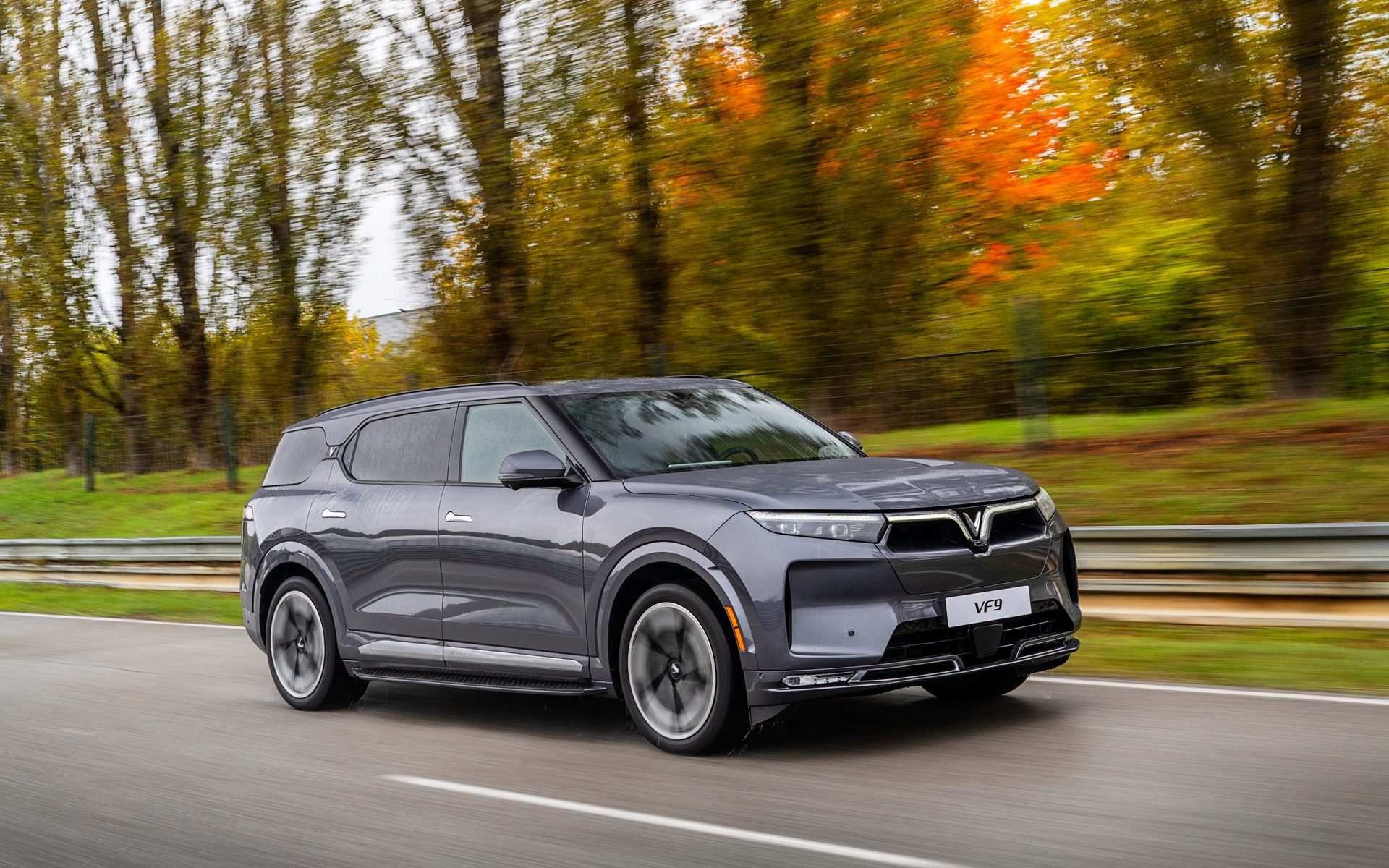
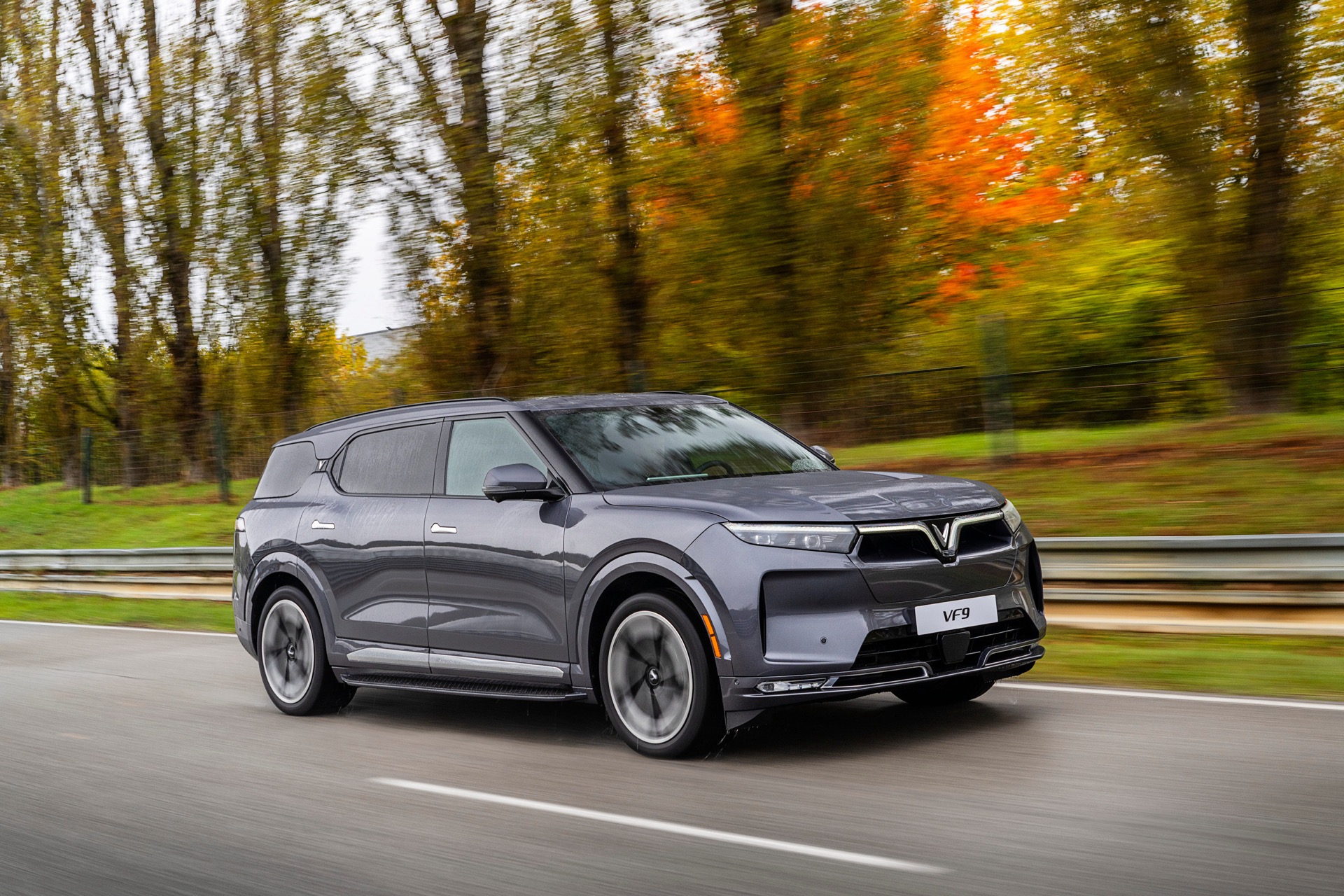
VinFast VF9 Driving on the road in the fall

VinFast VF9 Driving on the road in the fall


A key component of your VinFast VF 8 and VF 9 is the ability to recoup energy back into the battery pack. This is done through regenerative braking. It works by simply pressing the brake pedal, which generates kinetic energy that recharges the battery. It works optimally in “perfect” conditions. But what if the temperatures get colder? Or when the roads are either covered with snow or ice?


One thing to note is that regenerative braking on electric vehicles works differently than on internal combustion-powered ones. In winter conditions, the brake’s behavior will become less predictable. Any sudden braking will lead to loss of traction by skidding and instability.


How can you utilize regenerative braking safely during the winter? The first step is to adjust the regenerative braking level. In the center screen, you can adjust the settings to lower the intensity of the regenerative braking system and reduce the risk of sudden braking.


One thing you want to do is to slow down gradually while anticipating stops. You may also want to keep a longer distance between you and the next vehicle in front of you when the road surface is icy. In turn, you may have to monitor the roads you will be traveling on. If you know some stretches of roads have not been treated against icy conditions, you may want to find an alternative route to avoid them.


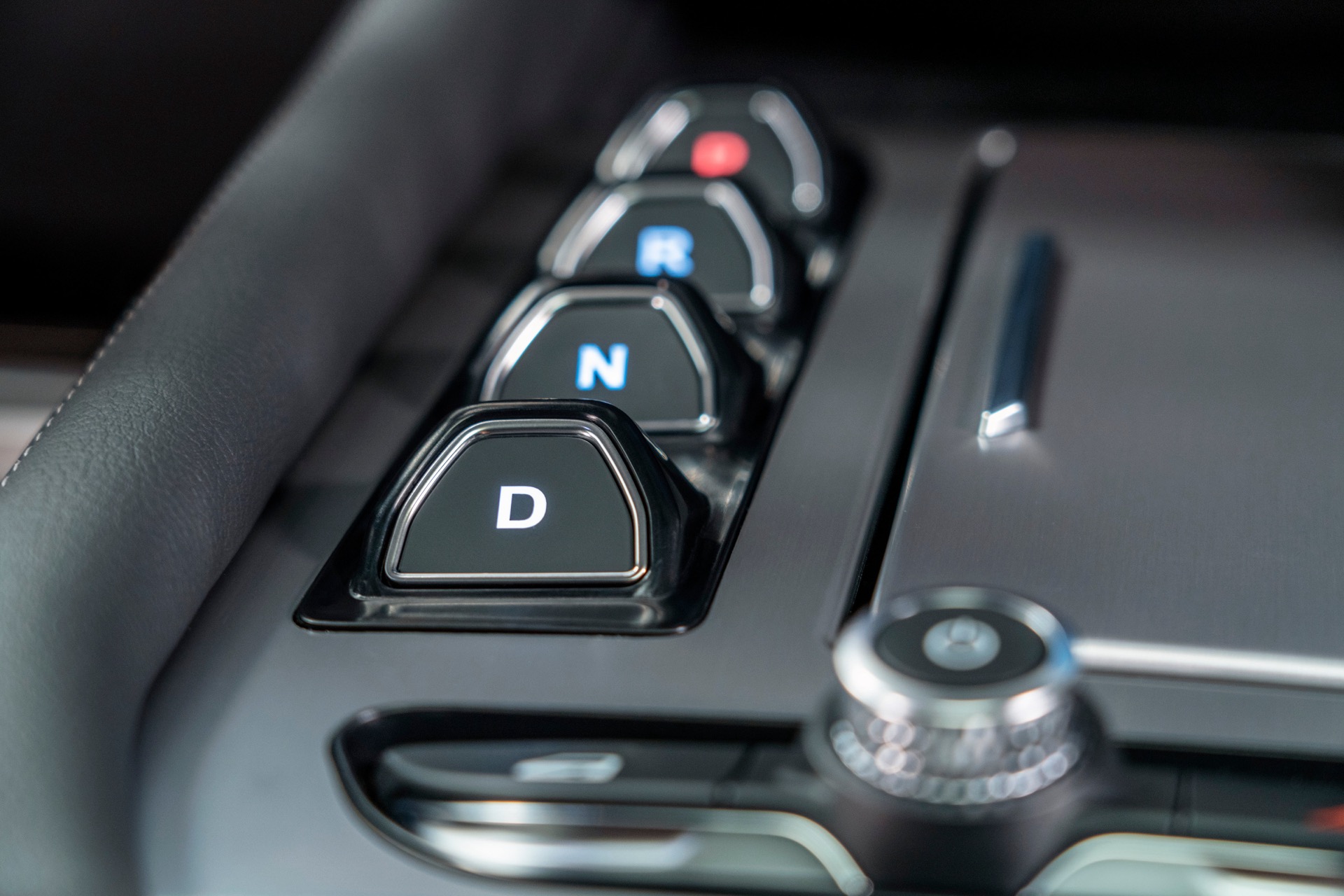
VinFast VF9 push button gear selector


While all-season tires are fine, winter or snow tires may be a better option for you. These usually work in climates where snow and icy conditions are pervasive. Given that the Metroplex can surprise you with a cold snap or snow – or, if you are traveling into a colder location – a second set of winter/snow tires on similarly sized wheels is a good long-term investment.


The best thing to do when a snowfall occurs in the Metroplex is to practice safe driving during these conditions. An empty parking lot is recommended for winter driving practice. This will also help you familiarize yourself with how your VF 8 or VF 9 will behave on snow or ice.


Some cautionary items to consider. Please do not drive on a steep hill that is covered with ice. You can guarantee that no matter how much traction your EV can generate, there will be no traction that can assist you going up or down it. That goes for any extreme road conditions you may encounter around town and beyond.


Vinfast V9 interior of the front seats and media console


There are several benefits to using regenerative braking in winter. Your range will improve, and brake wear is reduced. When the system works in your favor, you can achieve these results and save some money in the process through recharging and maintenance.


You can handle any weather in your VF 8 and VF 9. The benefit of regenerative braking makes it a valuable tool that will get you through any weather. Just be cautious on the road.


If you have any questions about utilizing your VF 8 and VF 9 as a year-round vehicle, please contact us at Ewing VinFast of Plano, and we will help you navigate the next surprise winter storm.