​​Having the Best EV Ownership Experience Is as Easy as ABC​

Always Be Charging - ABC

Always Be Charging - ABC


There is no doubt that EV ownership involves some changes in how you interact with your personal transportation. It is also true that EV ownership works much more smoothly when you can charge at home. If you can charge at home, you should be aware of this fundamental ABC of EV ownership. ABC stands for “Always Be Charging.” This Ewing VinFast of Plano blog explains. 


Obviously, EV ownership means never having to go to a gas station to refuel your vehicle. But the reasoning behind Always Be Charging is that EV owners should shift from the gas-refuel mindset, which involves waiting until their vehicle is low or nearly empty before refueling. Not only is this unnecessary for anyone who charges at home, but it is also not a good idea. Ideally, you should plug in your car every time you come home. There are a few reasons for this. 
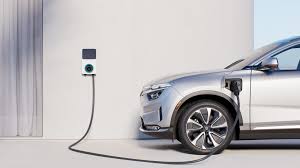
 

  VinFast Home Charging

Keeps You Ready 


This is the aspect of ABC that delivers the most immediate benefits.  Your vehicle is always ready, with a healthy state of charge, whenever you need it.  It is one of the many advantages of an EV over a gas-powered vehicle, so take advantage of it. 


Battery Health 


Every owner has an interest in extending battery life. Even if you plan to replace the vehicle long before the battery nears the end of its life, how much the vehicle has retained its original charging capability will be of high interest to any subsequent buyer. Thus, it isn’t wise to use Level 3 fast charging (DC-direct) on a day-to-day basis. Sure, it is fine to fast-charge during a long trip, but charging during your daily routine should be done at Level 2 or even Level 1. The sweet spot for optimal battery health is a shallow state of charge, which is in the upper half but not at 100%.  You want to avoid nearly 0-100% charge cycles whenever possible, and you also want to avoid leaving the battery at a low state of charge, such as under 20%, for extended periods. Both of these habits contribute to battery degradation over time.  
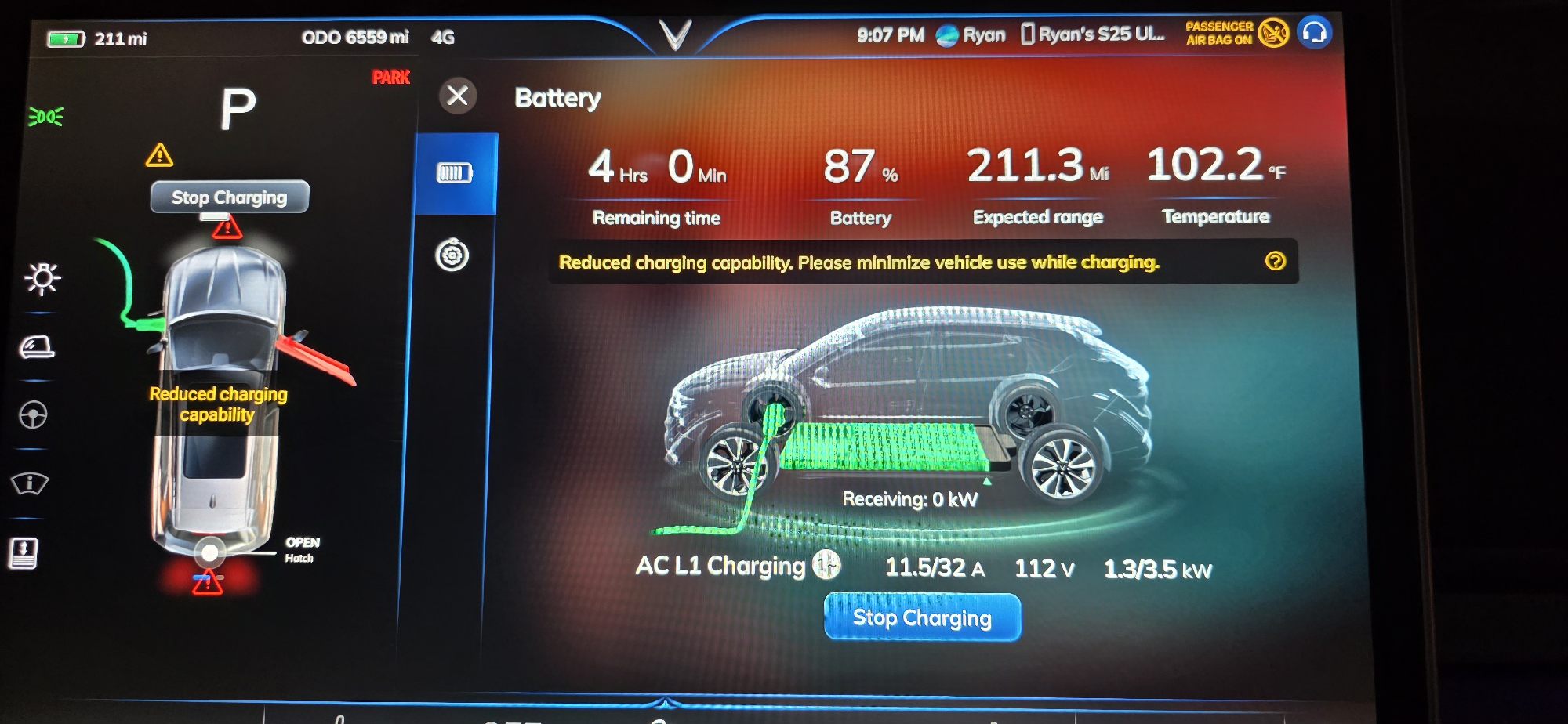
 

  80% Charge Level


Getting down to a 20% state of charge is expected on long trips that involve recharging at public stations. If your commute or daily routine is well within the vehicle’s full range, try to keep the vehicle charged enough to cover your daily routine with a healthy buffer, but there’s no need to charge to 100% since you don’t need to.   


Let’s say your daily drive routine is up to 80 miles, and your model has a range of 230 miles. Thus, 80 miles uses about 35% of your battery’s state of charge. If you set your EV to charge at home to 80% and plug it in every time you come home, your battery will stay between 45% and 80% at all times, which is ideal and helps keep the battery in the best state to extend its life. 


A third ABC reason is that keeping your vehicle plugged in at home lets you draw power from the grid whenever you want to pre-heat or pre-cool it before heading out. Not only does this make your vehicle very comfortable every time you leave home, but it also reduces the drain on the battery needed to get your vehicle to a proper temperature. Now all it has to do is maintain that temperature, which requires much less energy. The occasional software updates, which consume energy, will also be powered by the grid rather than the battery. 
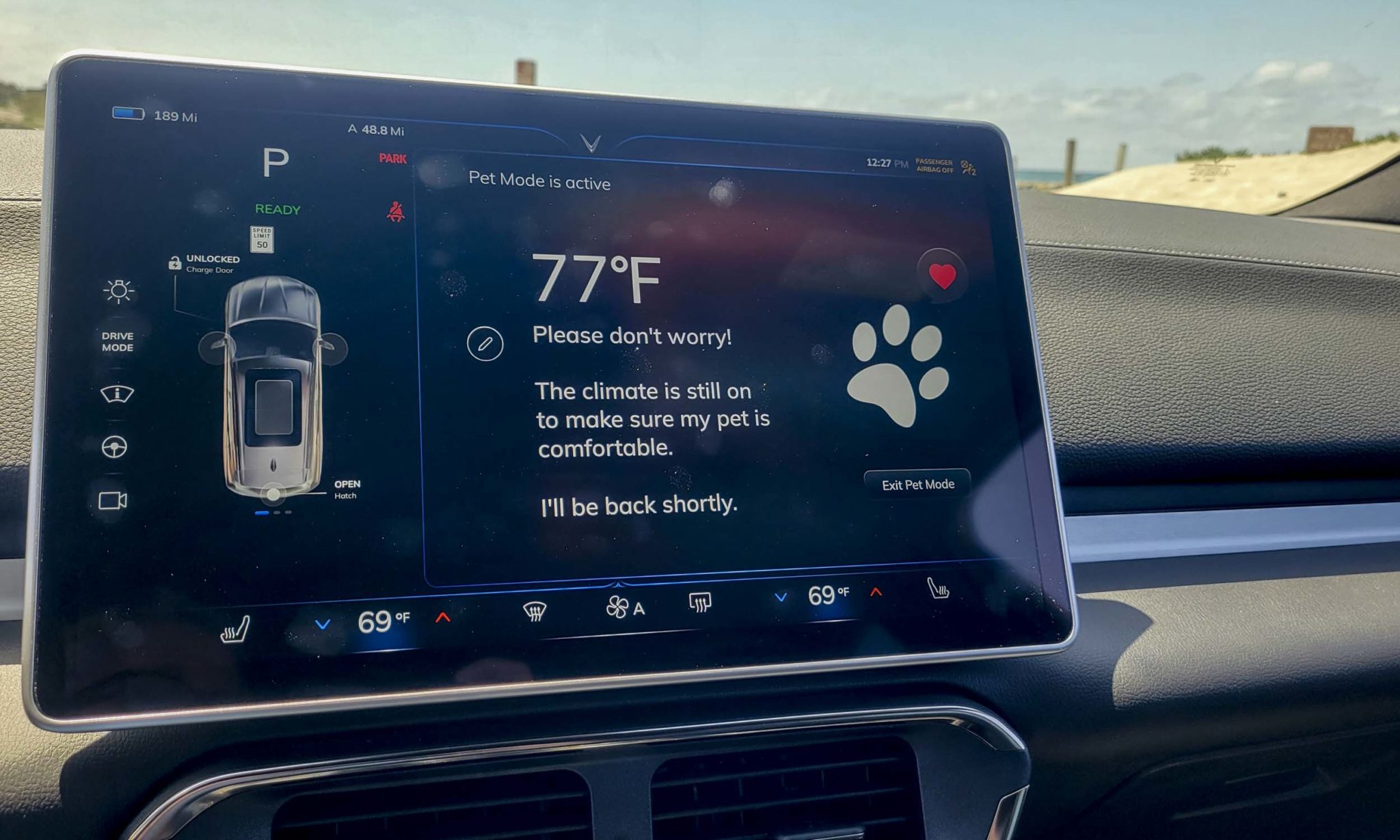
 

  VinFast Front Dash Screen


Again, all it takes is setting your charge limit to 80% (which you can change back to 100% before a long trip) and getting into the habit of plugging in your vehicle every time you come home. If you don’t have many evening trips after coming home, you can still take advantage of lower charging rates at certain times by selecting the start time for your charge. 


Remember when you first started using your seat belts every day? At first, you had to remind yourself, but later it became a habit you don’t even think about. Consider charging your EV at home the same way. If you have any additional questions about ABC, contact the service professionals at Ewing VinFast of Plano for the best advice.  
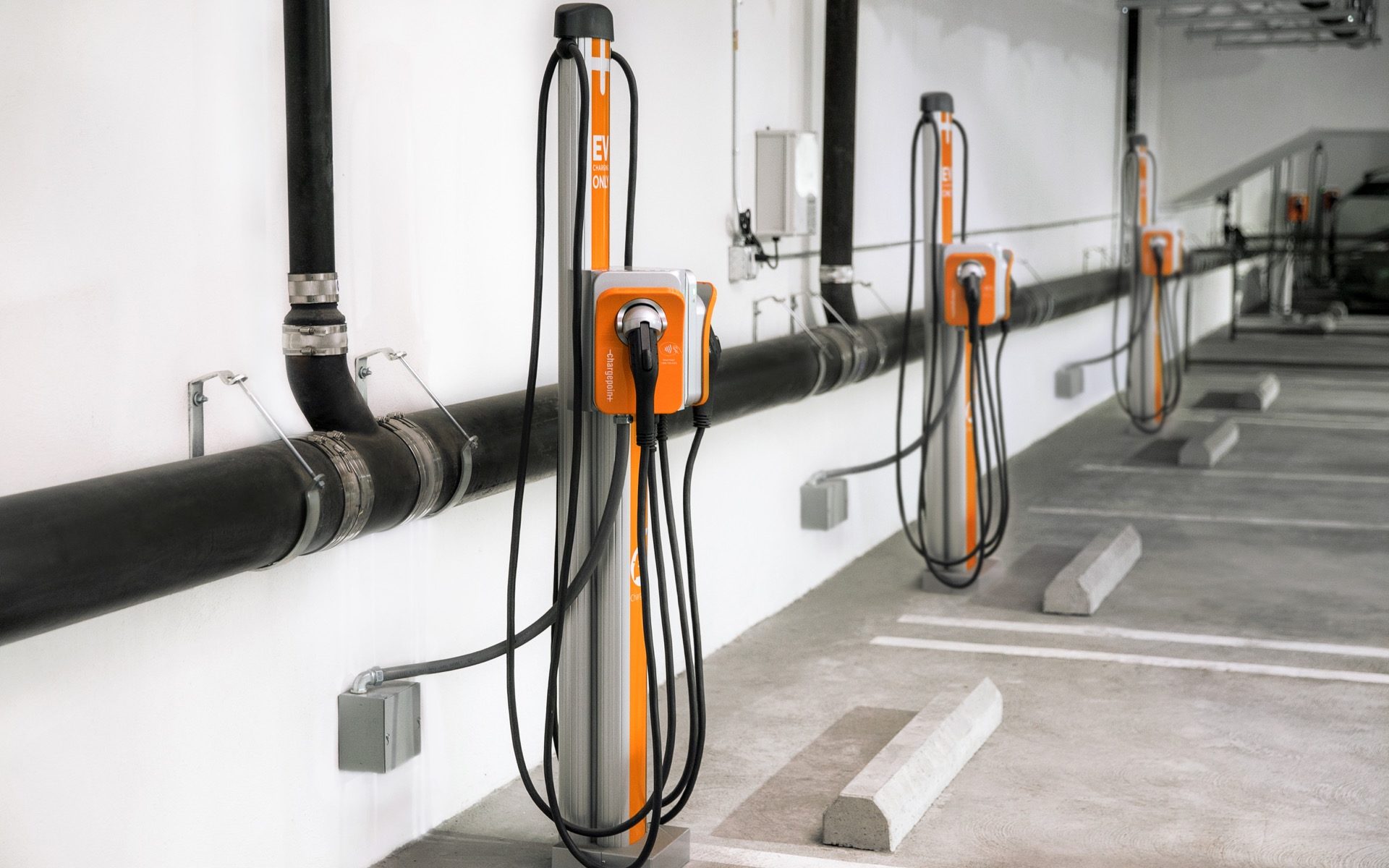
​​What Are the Differences Between Charging ”Levels”?​

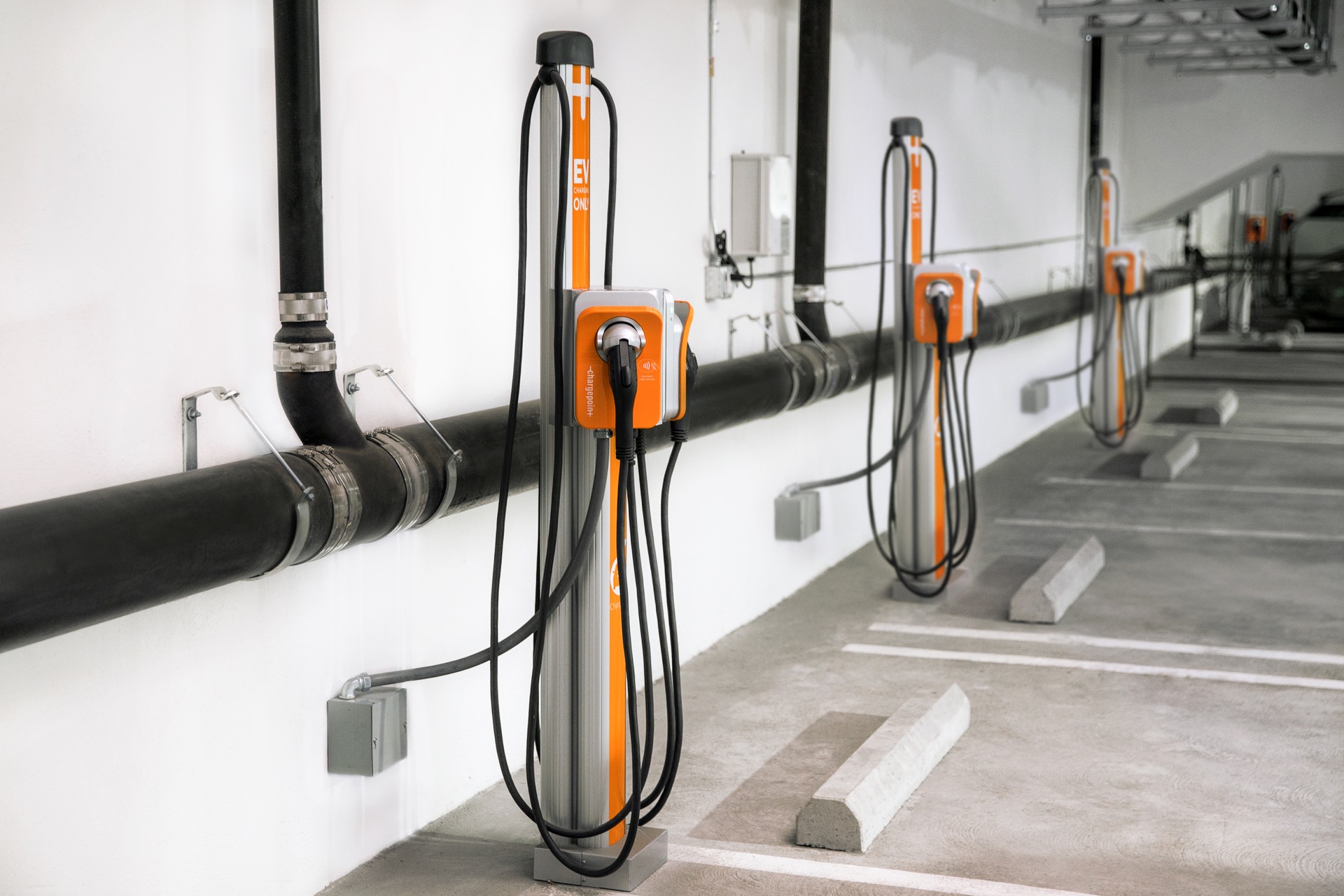
Chargepoint EV Charging

You may have heard that there are three levels of charging for your VinFast VF8 and VF9. Even though they are different, the principle of their use is the same – to return energy into the battery pack of your vehicle. What are these three levels? Which is best for your VinFast electric vehicle, and which will fit your needs? 


For starters, there is Level 1. While it plugs into your VF8 and VF9 via a J1772 connector, it also plugs into a 110-120-volt three-prong wall socket. Charging is slow, but you can charge from any electrical outlet with a charger available. 


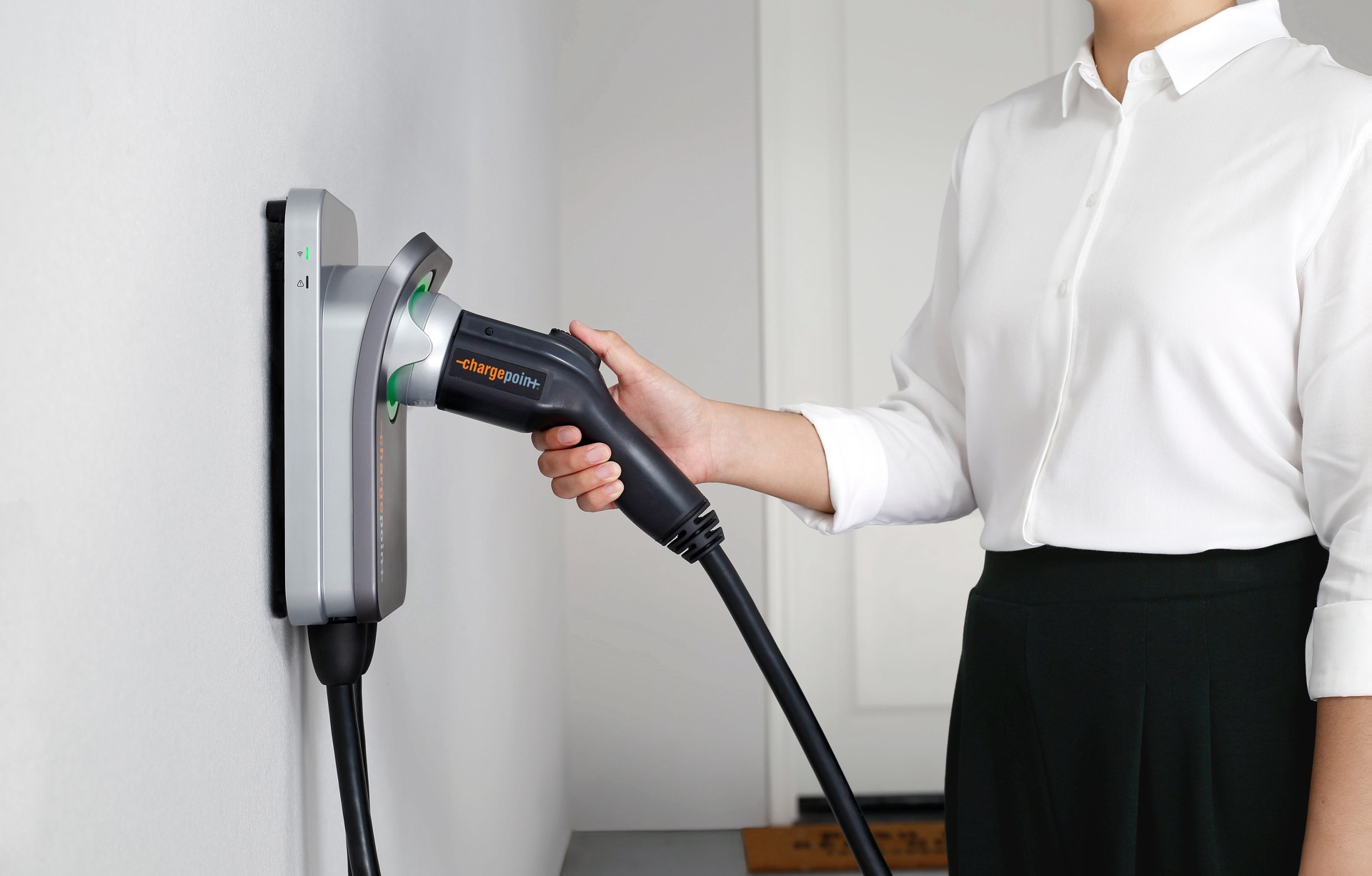
Chargepoint EV Charging


If you need more energy sooner, step up to Level 2. This is now the most common method for recharging your vehicle. Level 2 chargers are available in two ways. One is a hard-wired home charging station that runs off your home’s 220-240-volt electrical circuit. Using one of these chargers – including VinFast’s own Home Charger – can deliver 25 miles of range per hour of charging. In fact, it would take 9-1/2 hours to recharge from 6% to 100% state of charge. All you have to do is plug in your VF8 or VF9 when you get home, and it will be fully charged by the time you head out the next day.  


The other type of Level 2 charger is found at various public locations. You can find them at city parking lots, grocery stores, and other retail locations. Recharge rates vary by location. You may find that they are offered for free at several locations, as a courtesy of the store or location. 


Charge Point


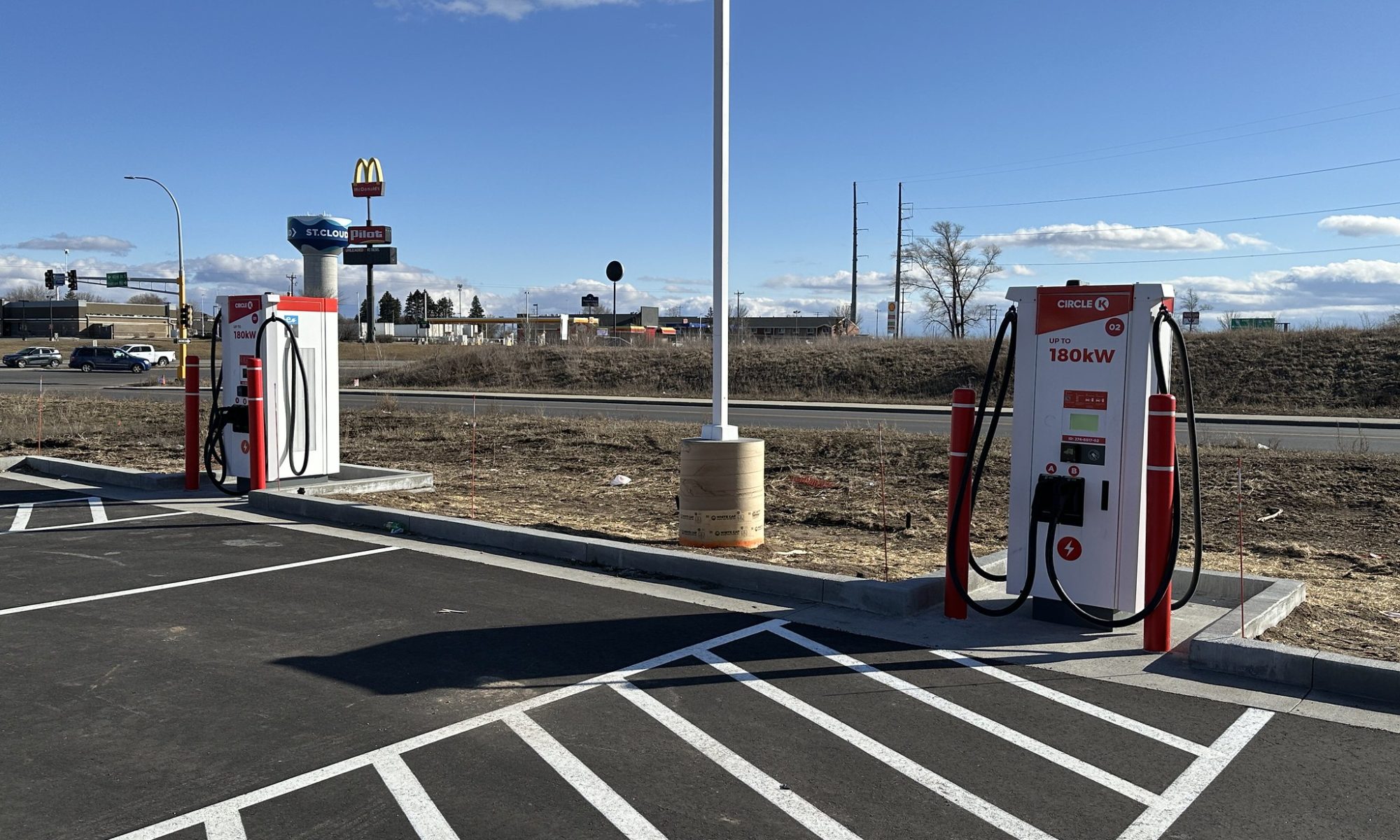
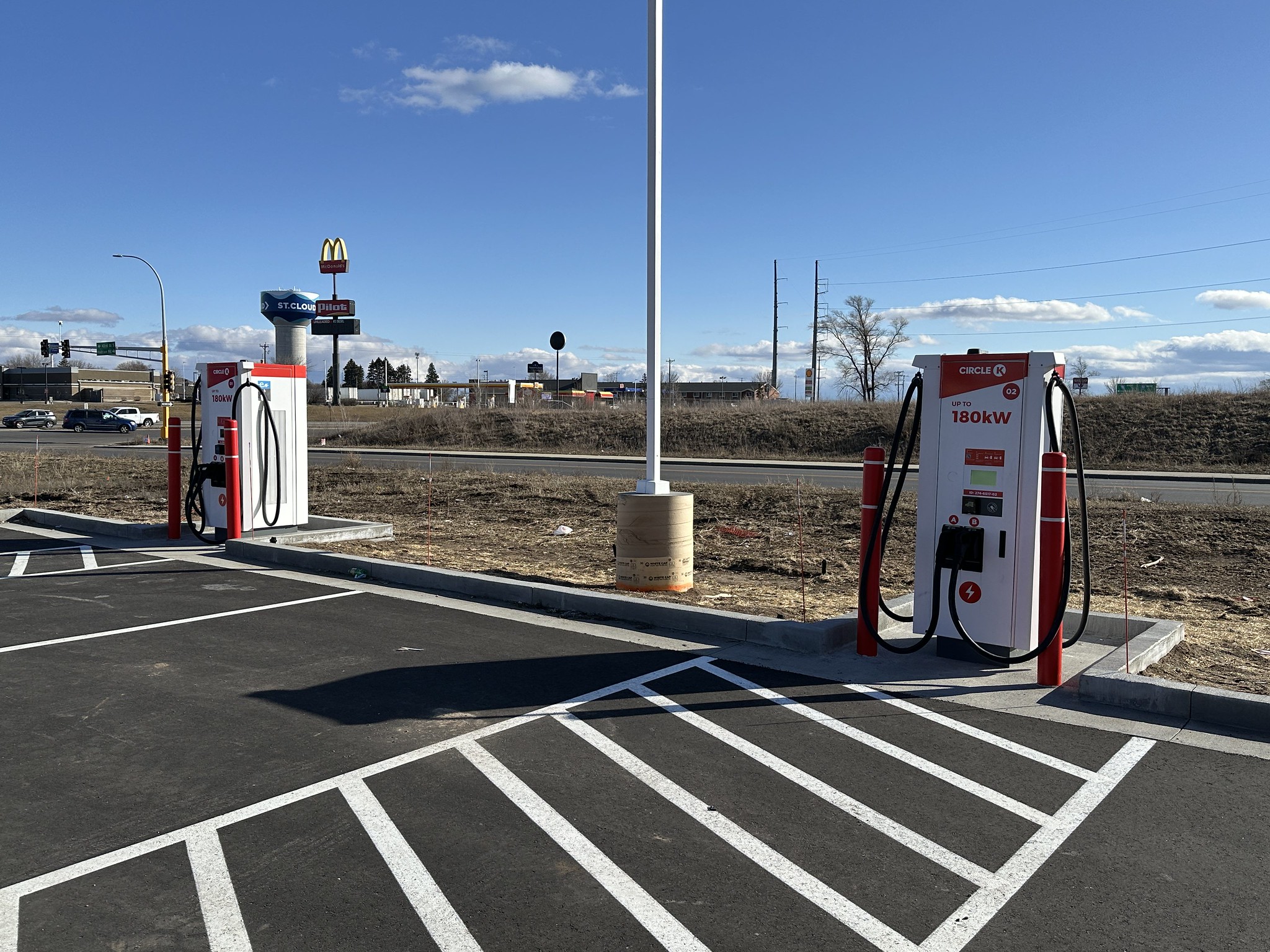
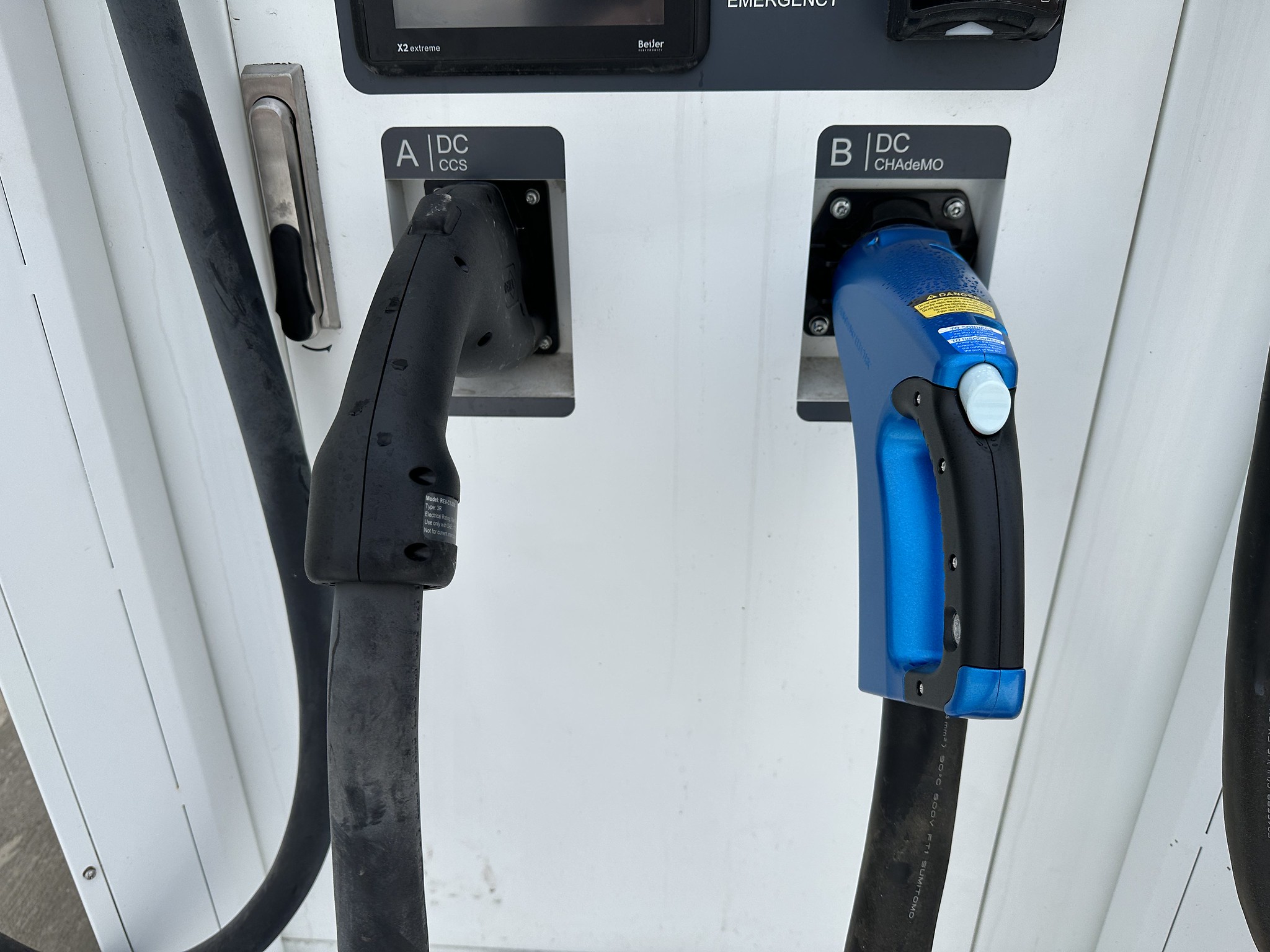
A growing number of public charging stations run at Level 3. Also known as DC Fast Charging, these high-voltage stations are designed for quick recharges on the go. For the VF8 and VF9, they use a combined plug with a J1772 and CCS connection. The CCS part – the lower two-prong outlet in your VinFast, is where transfer of energy accelerates to add more back to your battery.  


In fact, it takes about 25-35 minutes to recharge your VinFast from 10% state of charge to 70% using a public DC Fast Charging station. These stations may charge for their charging services. However, your VinFast App can help manage these charging sessions by loading a payment method, simulating the charging session, and monitoring its progress.  


Tap to Charge with Mobile


Another type of DC Fast Charging plug is the NACS (North American Charging Standard). This plug type is not on your VinFast, but you can get a third-party adapter for the times when you find yourself at a station that uses the slimmer NACS port.  


At Ewing VinFast of Plano, we are here to assist you with your ownership experience – including tips for charging your VF8 or VF9. If you have any further questions, do not hesitate to contact us. 

​​What Happens When Your EV Battery Loses its Range?​

Ev Charging stations

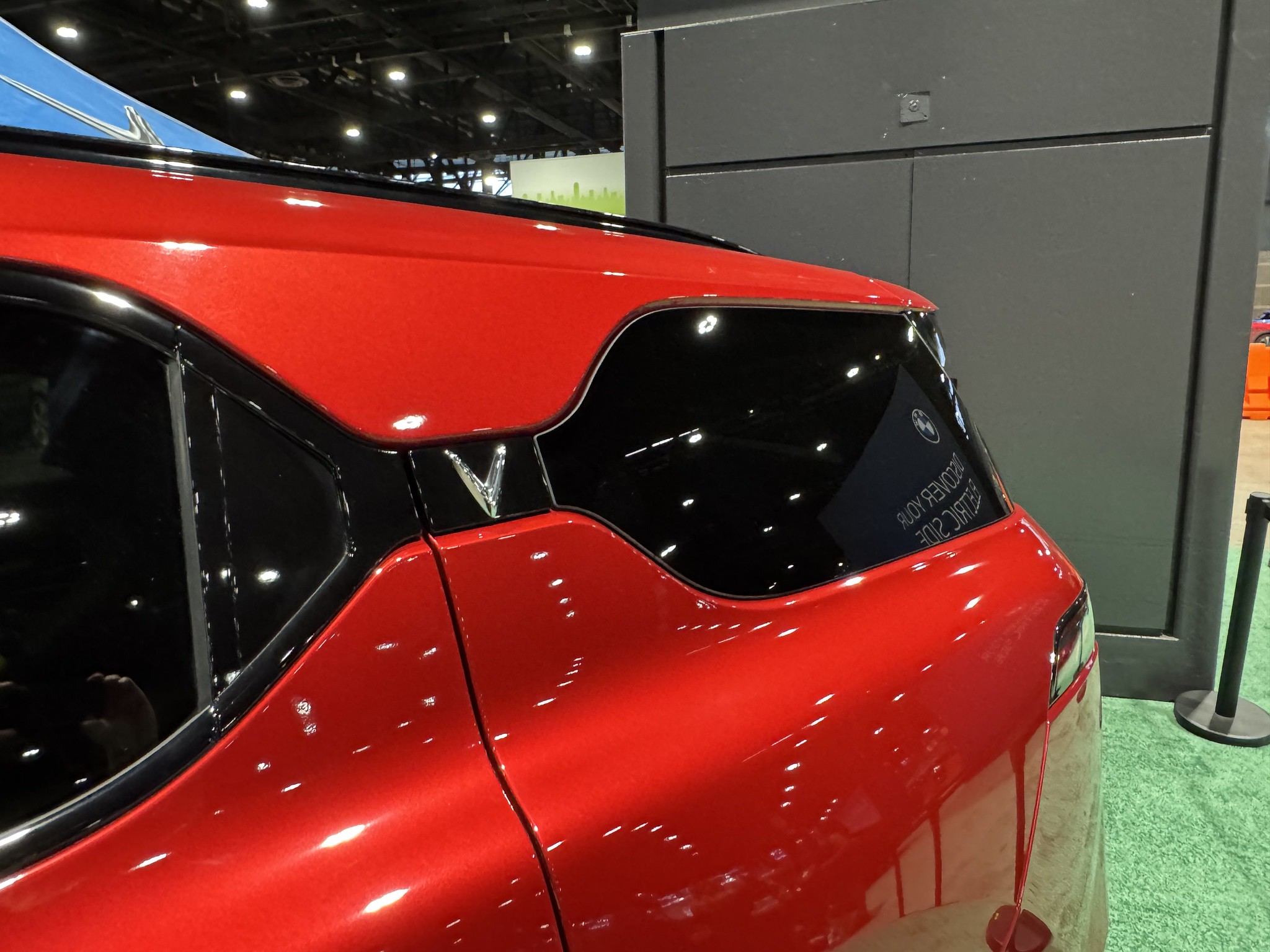
VinFast VF7 Red parked in a showroom


The battery that fuels your electric vehicle is essential to its operation. It enables the motors and other key components to run. It requires charging to keep the energy flowing in your vehicle. Over time, your EV battery might degrade. It may lose range and the ability to charge up robustly. The question becomes: how can you manage battery degradation, and what can you do to prepare for when it happens?


How the battery degrades depends on the age of the pack and its components. Chemical reactions within cells reduce the amount of energy they can store. That will reduce the range, which in turn will require more frequent charges. As a battery’s health declines, its reliability decreases. After 10 years, you may not be able to achieve the same range as when you first bought your EV.


Ev Charging stations


There are other factors to consider. The climate is a big one. The Metroplex can reach the 100-degree Fahrenheit range during the summer. It can also get below freezing in some winters. Add the humidity we often get. These can affect battery health, leading to degradation. High mileage, vehicle age, and usage can also affect the health of the battery pack.


Considering all of this, you should monitor your battery health as you continue your EV ownership experience. You might want to watch for a 5-10 percent degradation in the first few years. That would translate into a range of up to ten percent less than when you first took delivery of your new EV.


Can you check the battery health of your EV? Yes, there are tools available that can monitor any degradation. Apps and scanners can read data from the battery to detect performance instability patterns through the management system. This is also a good tool for shopping for a used EV, helping you assess the battery’s health before you purchase.


Ev Chargers


What can you do to keep your EV’s battery pack healthy? The iSeeCars.com website suggests that you can “avoid keeping the battery at 100% or letting it sit near empty for extended periods. Limiting the use of DC fast chargers. Using a level 2 home charger as your primary charging system, while saving fast charging for long trips or occasional needs, reduces that stress.” Plus, keeping your EV out of the heat and humidity, and making sure your battery management software is up to date.


By the way, VinFast backs its battery packs with a 10-year, unlimited-mileage warranty. It is that extra peace of mind for our customers.


If you have any questions about the battery inside your vehicle, contact us at Ewing VinFast of Plano. We are here to assist you throughout your ownership experience.

EVs and Rain, Myths vs. Truth

Car driving through deep water on the road

Cars in inches of water on the street


We have been conditioned from a young age that electricity and water don’t mix, whether through scary stories about a hair dryer, a radio, or some other plugged-in appliance dropping into an occupied bathtub. Or when lifeguards would quickly evacuate pools at the first sign of lightning in the distance. So, perhaps it isn’t surprising that, even with electric cars on the streets for over a decade, myths persist that EVs won’t work or are dangerous in the rain. Ewing VinFast of Plano is here to explain that those myths are just that, with no real truth behind them.


First, it is worth noting that cars have had electrical components since Cadillac replaced gas-powered headlights with electric units in 1912 (technically, they weren’t the first, but they had the first reliable units). Since then, cars have added more and more electric features with few issues. Of course, those components operate at much lower voltages than those involved in vehicle propulsion systems, but automakers have more than a century’s experience in keeping electricity and water separate.


Is There Danger in Driving an EV in the Rain?


Driving in the rain is always more dangerous because of slick roads and poorer visibility, but EVs don’t add any additional issues. The battery packs and wiring have all been securely insulated from the outside, and EVs have been tested with strong jets of water coming from all directions. Electric vehicles are no more likely to be struck by lightning than any other vehicle, and, like them, the outer mechanical frame is designed to divert current to the ground and away from the interior.


Car driving through deep water on the road


Are EVs More Likely to Hydroplane?


Hydroplaning occurs when a layer of water forms between the tires and the road surface, significantly reducing friction and causing a vehicle to slide or spin. It is primarily a function of road surface, tire traction, weight, and speed. EVs are 54.4% less likely to hydroplane due to their heavier weight, which presses them harder into the road, but the same caution should be applied as with other vehicles. Reduce speed, reduce it even more in turns, brake more gently, and avoid standing water whenever possible.


road washed away by a flood


Can You Drive an EV through Flooded Streets?


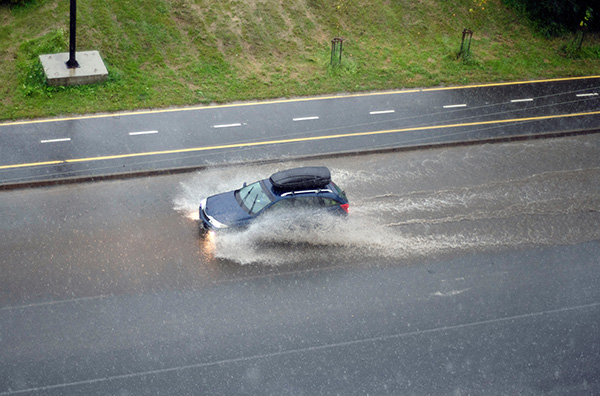
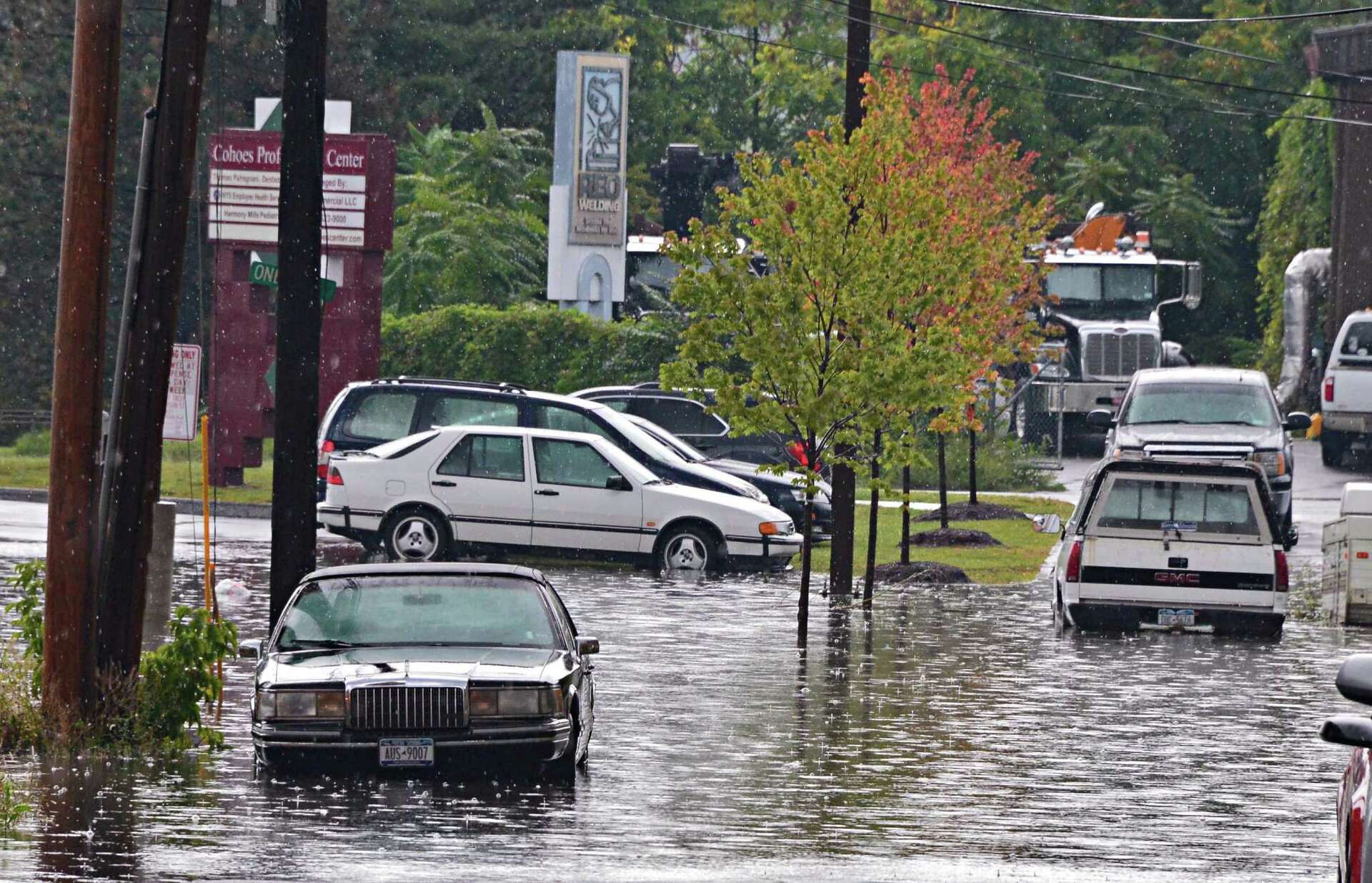
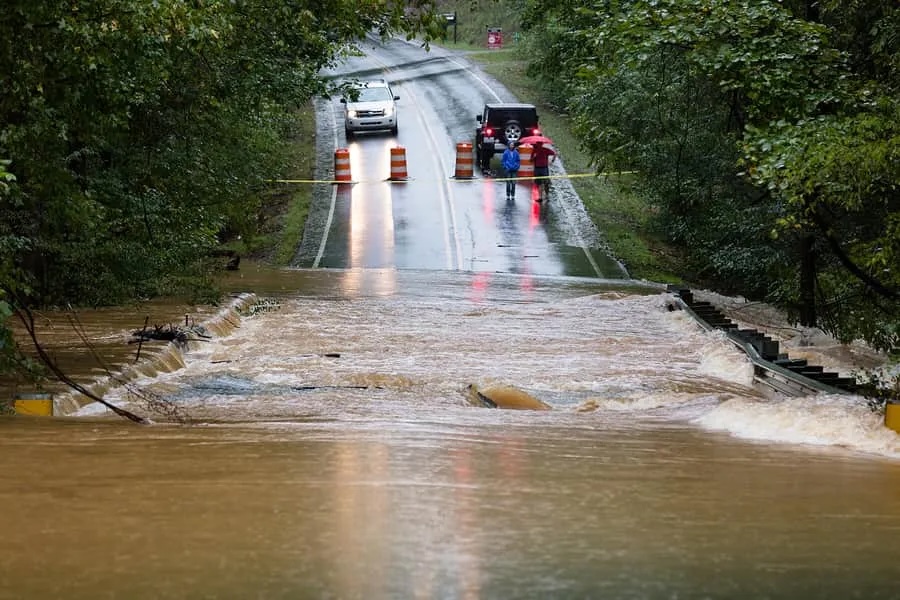
It is never a good idea to drive any vehicle through high water, and it is the leading cause of deaths in severe weather. However, in general, EVs have a significantly reduced risk of stalling in high water because their drivetrains are completely sealed, with no intakes or exhaust pipes for water to enter the system.


One potential exception is saltwater flooding. In 2022, Florida experienced multiple EV fires after Hurricane Ian, caused by thermal runaway when saltwater created conductive “bridges” inside the batteries. It was rare, with 36 occurrences among some 3000 – 5000 EVs caught in the saltwater floods, but no vehicle should be operated in high water unless it was specifically built for it.


Can you Charge an EV in the Rain?


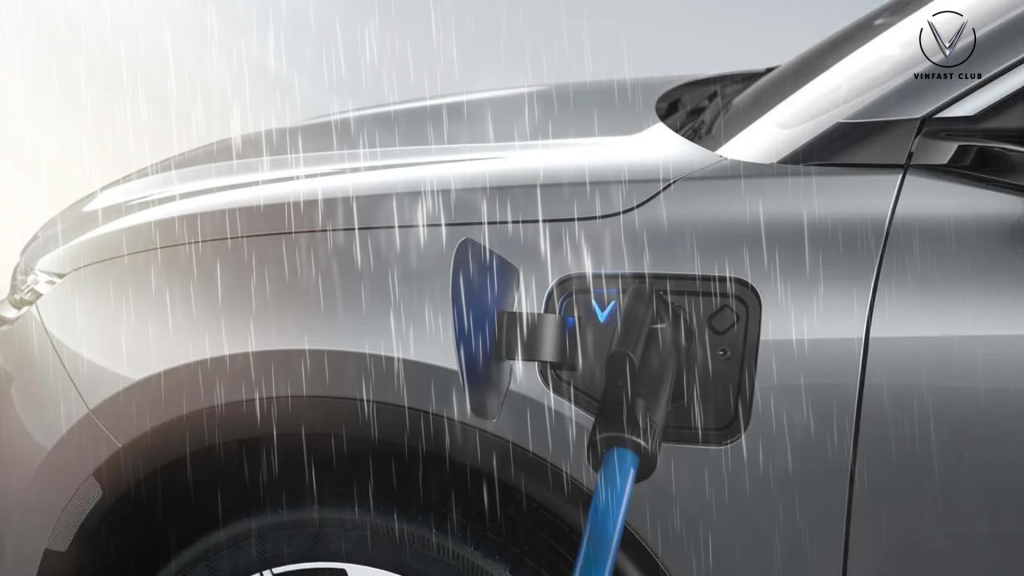
Yes. Unlike household plugs, EV plugs are thoroughly waterproofed. They are rigorously tested by OSHA-certified laboratories, where they are subjected to high-pressure water sprays, as from a fire hose, and must meet the safety standards set by the Society of Automotive Engineers. Indoor charging at home is preferable because charge times are more consistent when temperature extremes are avoided, but rain and snow are not issues for charging.


Charging an EV in the rain


If you have other questions regarding EVs and water or other climate issues, ask the service professionals at Ewing VinFast of Plano, who are very familiar with any issues impacting EVs.

Being Confident When Running an Electric Vehicle in Cold Weather

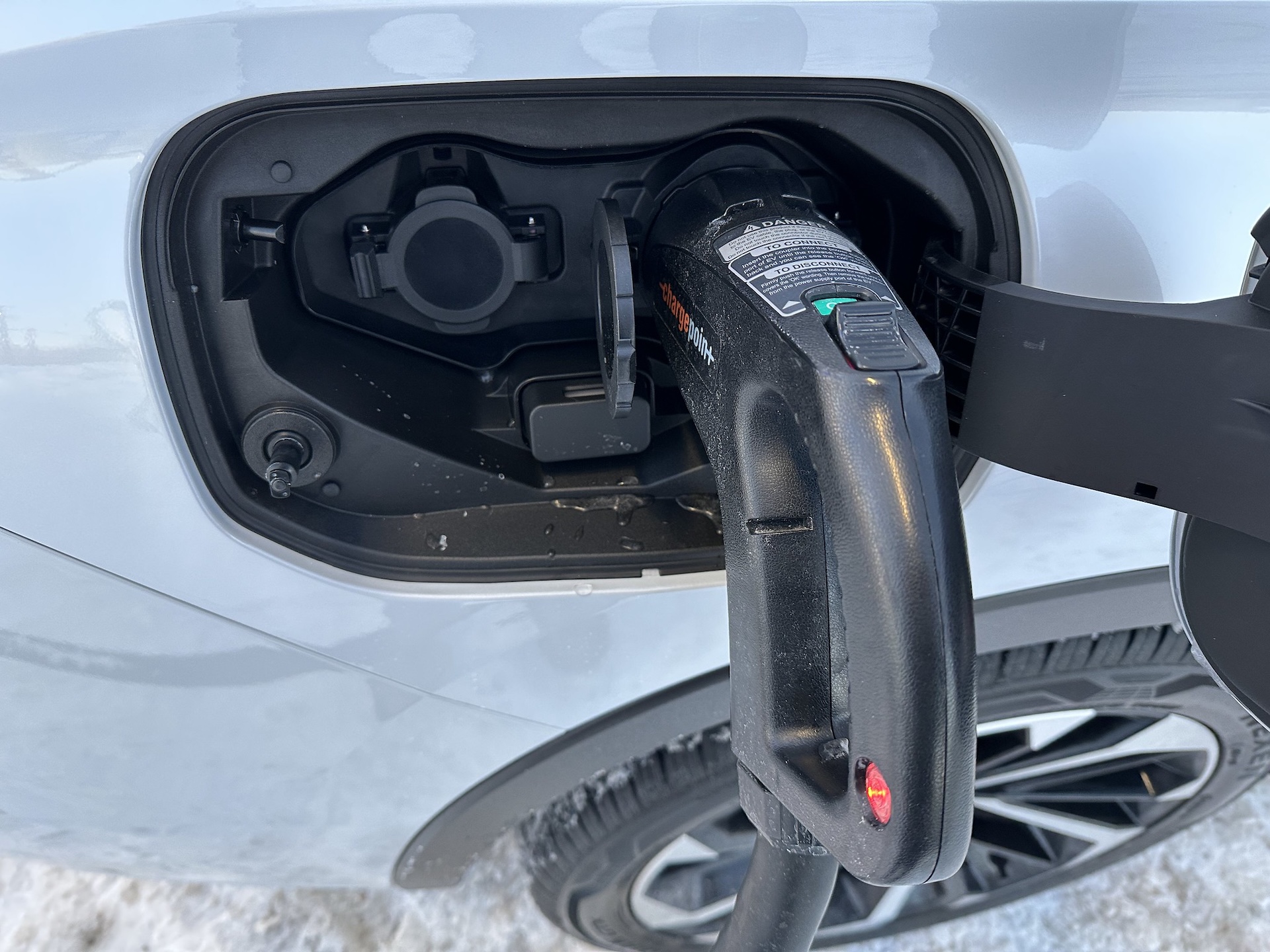
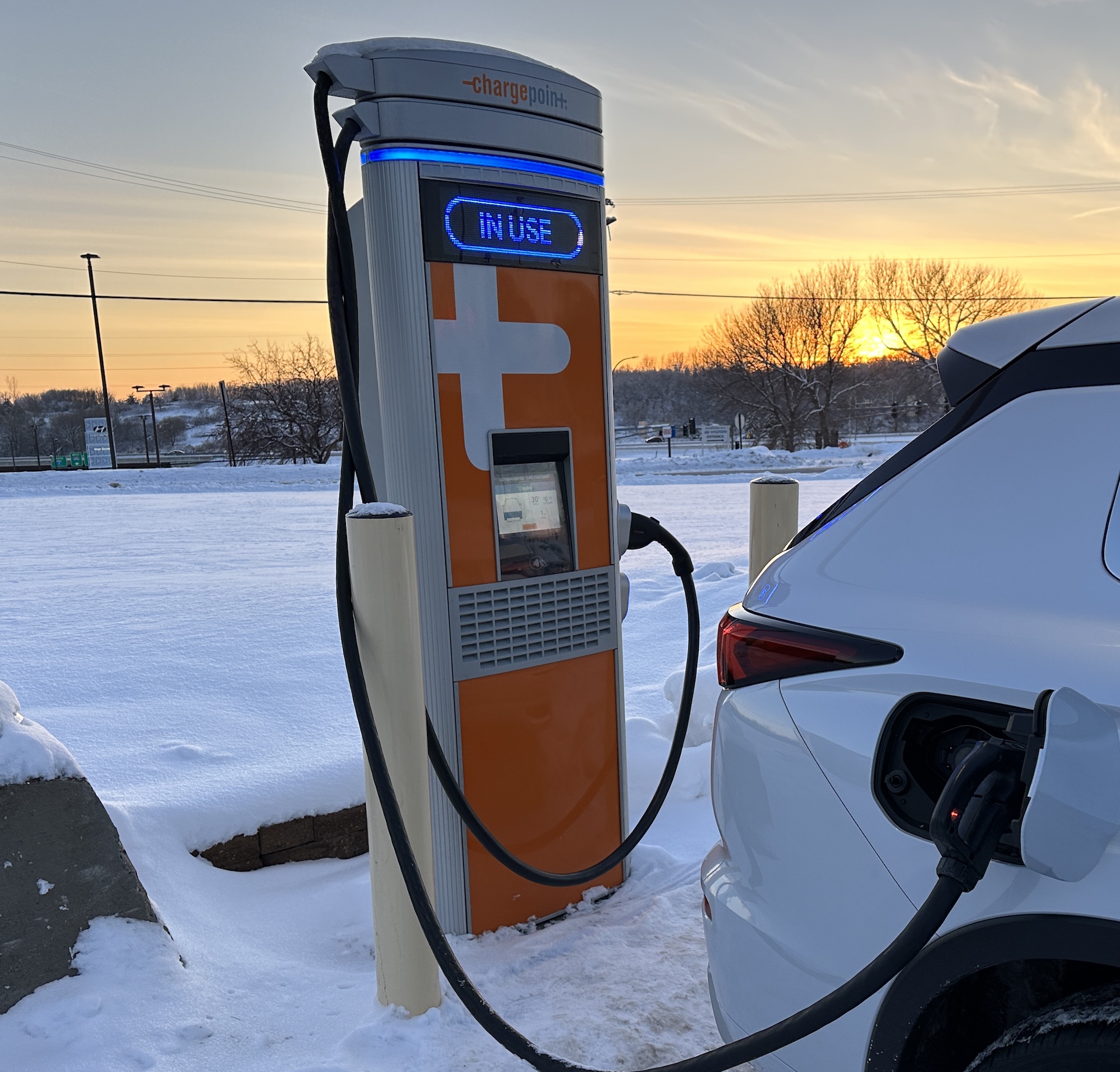
EV Charging Station in Snowy weather

EV Charging Station in Snowy weather


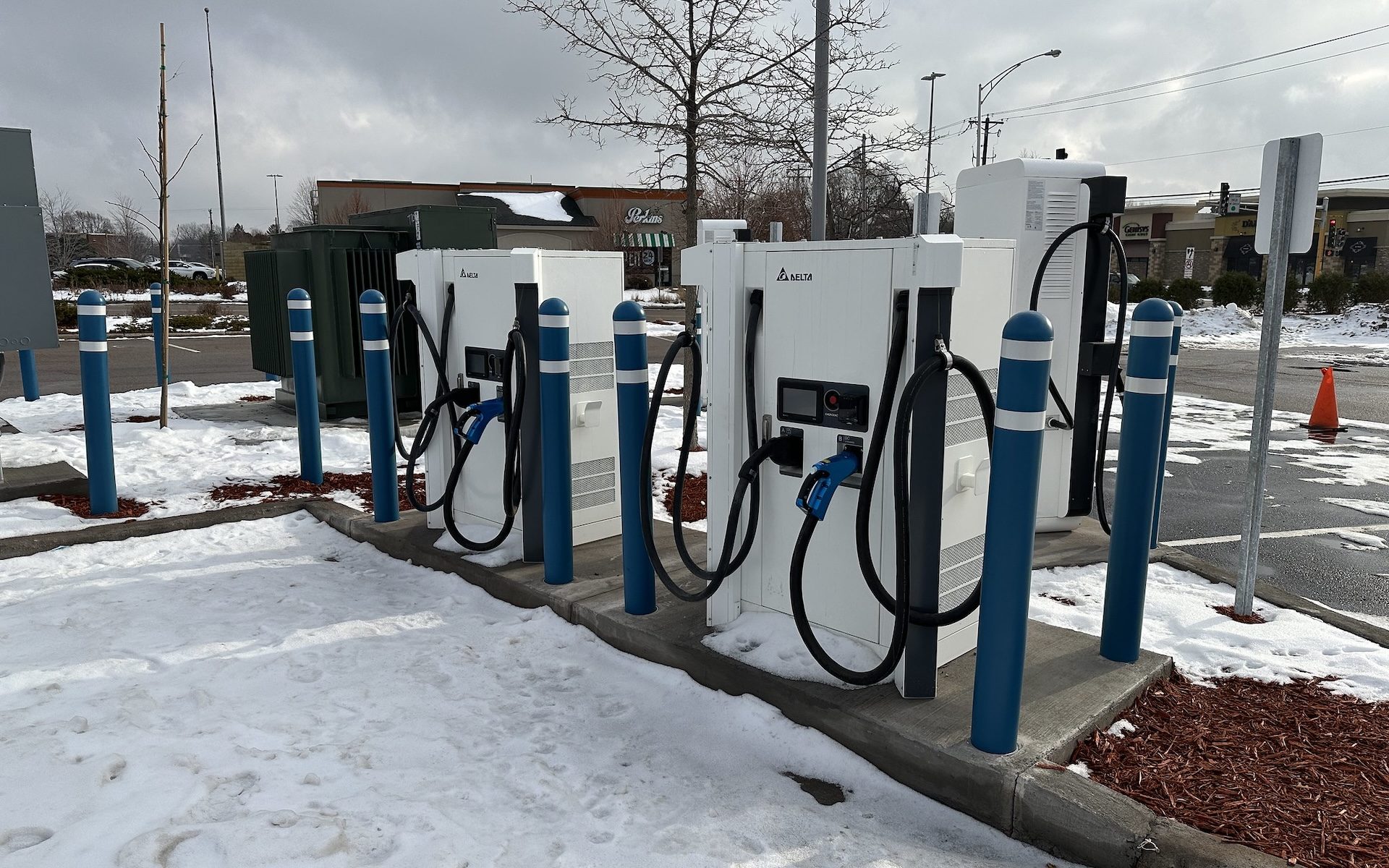
One of the challenges of living in the Metroplex is the occasional cold snap we experience every year. While we think we can handle anything throughout the year, we sometimes find ourselves in very interesting situations. As we transition to electric vehicles, we have to remind ourselves that the operational nuances they provide are especially important when the temperatures drop to near freezing and the roads become icy. Here are a few things to consider for your VinFast VF8 and VF9 when it gets cold outside.


When you are not driving your EV, simply park your vehicle in a garage. If you happen to have an at-home charging unit, go ahead and plug it in. That way, your vehicle will be fully charged the next time you have to venture out in the cold.


EV Vehicle at a charging station

Before you venture out, you definitely want to remove all snow and ice from your vehicle. A handy snow brush and ice scraper are all you need for the body and glass. You also want to clear the wheel wells of accumulated snow and ice with an ice scraper or a rubber mallet. Just be careful when you do it to avoid fender and wheel-well damage.


Another thing to check is the tire pressure. Inside the driver’s door sill is a sticker showing the recommended pressures for your VF8 and VF9 tires. If your tire gauge shows the pressures are higher or lower, adjust them accordingly. It is probably best that you do so before driving away from home, so you do not get caught with a tire pressure warning indicator on the center touchscreen display. If that indicator comes on, drive a bit to warm up the tires. If it is still on, get air in those tires at your soonest opportunity.


While you’re out on the road, keep in mind that once you turn on the heater and heated seats, you may be sapping energy from the electrical system. This could reduce the overall range of your vehicle. Simply reduce the heat from your climate control system and heated seats to avoid needing to recharge sooner than anticipated.


You can automatically precondition your vehicle’s battery in the VinFast VF8 and VF9 when you use the built-in navigation system on the center touchscreen by directing it to the nearest DC fast charging station. That enables the VF8 and VF9’s thermal management system to begin heating the battery. It can also be preconditioned during your charging session; however, it is best to start the preconditioning process 20-30 minutes before your charging session.


EV being charged in the winter with snow on the ground

Getting through the winter in your VinFast VF8 and VF9 will help extend your vehicle’s lifespan and enhance your ownership experience. It will also give you the confidence you need to get through any cold snap North Texas throws at you every year. If you have any questions, please contact Ewing VinFast of Plano, and we will be able to assist you.