We have been conditioned from a young age that electricity and water don’t mix, whether through scary stories about a hair dryer, a radio, or some other plugged-in appliance dropping into an occupied bathtub. Or when lifeguards would quickly evacuate pools at the first sign of lightning in the distance. So, perhaps it isn’t surprising that, even with electric cars on the streets for over a decade, myths persist that EVs won’t work or are dangerous in the rain. Ewing VinFast of Plano is here to explain that those myths are just that, with no real truth behind them.
First, it is worth noting that cars have had electrical components since Cadillac replaced gas-powered headlights with electric units in 1912 (technically, they weren’t the first, but they had the first reliable units). Since then, cars have added more and more electric features with few issues. Of course, those components operate at much lower voltages than those involved in vehicle propulsion systems, but automakers have more than a century’s experience in keeping electricity and water separate.
Is There Danger in Driving an EV in the Rain?
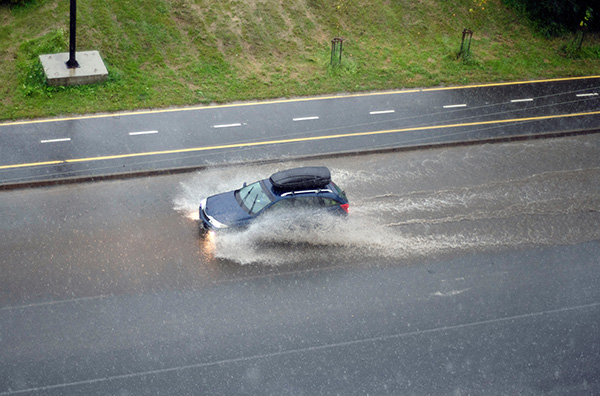
Driving in the rain is always more dangerous because of slick roads and poorer visibility, but EVs don’t add any additional issues. The battery packs and wiring have all been securely insulated from the outside, and EVs have been tested with strong jets of water coming from all directions. Electric vehicles are no more likely to be struck by lightning than any other vehicle, and, like them, the outer mechanical frame is designed to divert current to the ground and away from the interior.
Are EVs More Likely to Hydroplane?
Hydroplaning occurs when a layer of water forms between the tires and the road surface, significantly reducing friction and causing a vehicle to slide or spin. It is primarily a function of road surface, tire traction, weight, and speed. EVs are 54.4% less likely to hydroplane due to their heavier weight, which presses them harder into the road, but the same caution should be applied as with other vehicles. Reduce speed, reduce it even more in turns, brake more gently, and avoid standing water whenever possible.
Can You Drive an EV through Flooded Streets?
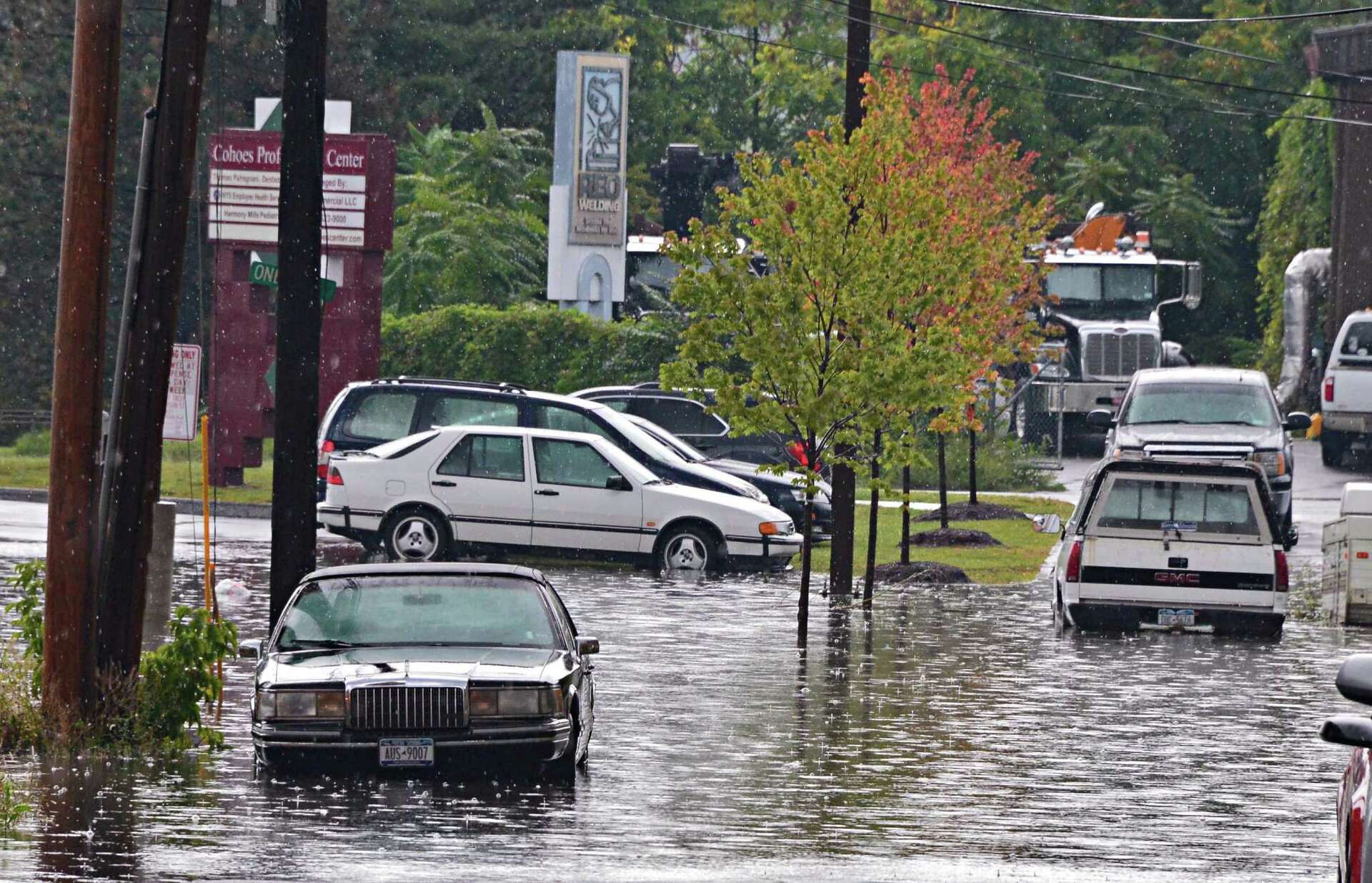
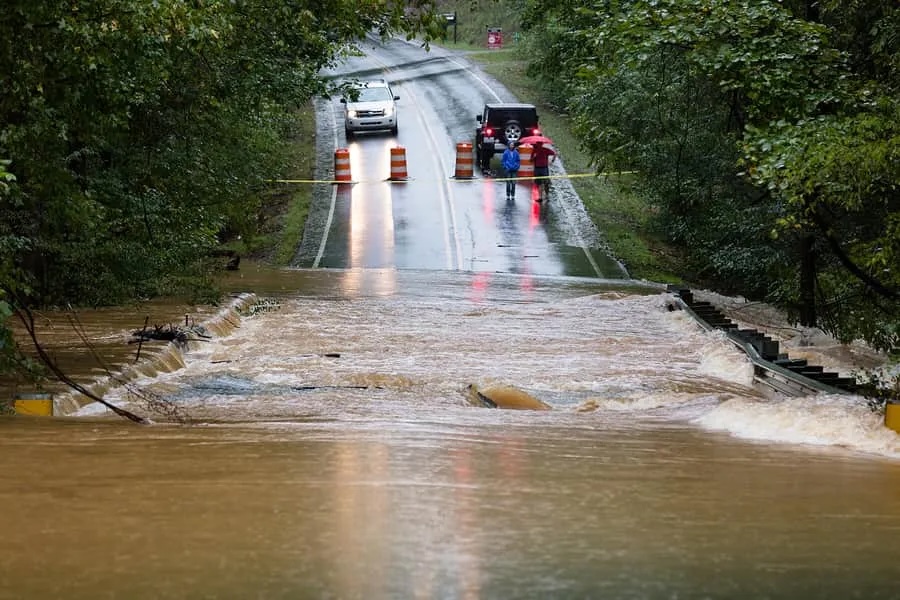
It is never a good idea to drive any vehicle through high water, and it is the leading cause of deaths in severe weather. However, in general, EVs have a significantly reduced risk of stalling in high water because their drivetrains are completely sealed, with no intakes or exhaust pipes for water to enter the system.
One potential exception is saltwater flooding. In 2022, Florida experienced multiple EV fires after Hurricane Ian, caused by thermal runaway when saltwater created conductive “bridges” inside the batteries. It was rare, with 36 occurrences among some 3000 – 5000 EVs caught in the saltwater floods, but no vehicle should be operated in high water unless it was specifically built for it.
Can you Charge an EV in the Rain?
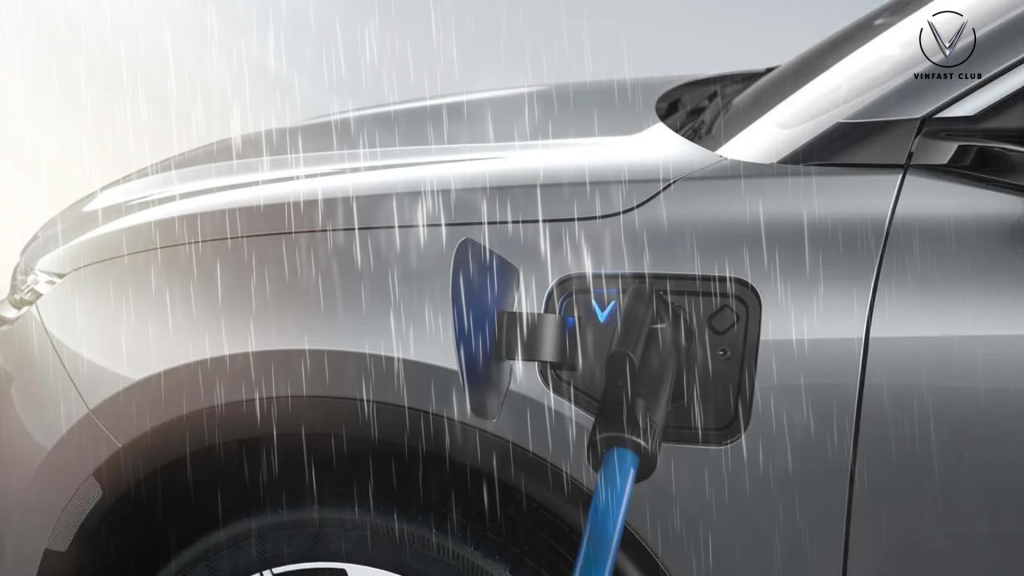
Yes. Unlike household plugs, EV plugs are thoroughly waterproofed. They are rigorously tested by OSHA-certified laboratories, where they are subjected to high-pressure water sprays, as from a fire hose, and must meet the safety standards set by the Society of Automotive Engineers. Indoor charging at home is preferable because charge times are more consistent when temperature extremes are avoided, but rain and snow are not issues for charging.
If you have other questions regarding EVs and water or other climate issues, ask the service professionals at Ewing VinFast of Plano, who are very familiar with any issues impacting EVs.